Introduction
Many families shopping for permanent life insurance get stuck comparing whole life and universal life without understanding what actually separates them at the contract level. Both build cash value. Both can last a lifetime. But they're built on different foundations.
Whole life locks in your premium, death benefit, and cash-value growth from day one, based on guarantees written into the contract. Universal life trades some of that certainty for flexibility, letting you adjust premiums or coverage as your life changes.
This choice matters more than most buyers realize. It affects how predictable your payments will be, how much cash value you can expect, and how much ongoing attention the policy needs. Skip these details, and you could end up with a policy that doesn't match your budget ten years from now.
This guide breaks down the real differences using guaranteed contract terms, not just illustrated projections. Every guarantee, though, is only as strong as the insurer standing behind it, and only holds if you pay as required.
Quick Summary
- Whole life locks in fixed premiums, a guaranteed death benefit, and scheduled cash-value growth.
- Universal life offers flexible premiums and often an adjustable death benefit—you carry the funding risk.
- Underfunding, rising costs, or weak crediting can shrink universal life cash value or trigger a lapse.
- Best fit hinges on budget stability, risk tolerance, and how closely you’ll monitor the policy.
Whole Life vs. Universal Life: Quick Comparison
Here's how the two designs stack up on the factors that matter most to buyers.
Coverage Period
- Whole life: Designed for lifetime coverage as long as you meet the contractual requirements, mainly paying premiums on schedule.
- Universal life: Can also last a lifetime, but longevity depends on adequate funding and the specific guarantees built into that policy.
Premiums and Payment Flexibility
- Whole life: Scheduled premiums are generally fixed under the contract, though limited-pay and single-premium designs exist for buyers who want to pay coverage off faster.
- Universal life: Premiums can be increased, reduced, or adjusted within policy limits. Paying less than planned can slow cash-value growth and threaten long-term sustainability.
Death Benefit
- Whole life: Generally fixed and guaranteed, subject to the policy terms, required premiums, and any outstanding loans or withdrawals.
- Universal life: Often adjustable, with guarantees that vary by policy design. Many UL policies do not guarantee the death benefit the same way whole life does unless secondary guarantees stay in force and adequately funded.
Cash-Value Growth
- Whole life: Cash value grows on a guaranteed basis, often at a fixed rate of 1% to 3%, separate from any non-guaranteed dividends a participating policy might pay.
- Universal life: Growth depends on credited interest, policy charges, and funding. Indexed and variable versions add index performance or investment-subaccount results into the mix.
Predictability, Oversight, and Cost
- Whole life: Appeals to buyers who want stable payments and minimal ongoing management, though premiums typically run higher than term coverage.
- Universal life: Can offer a lower-cost path to permanent coverage for some buyers, but it demands regular check-ins on charges, crediting assumptions, and lapse risk.
The National Association of Insurance Commissioners classifies both as cash-value life insurance, meaning coverage can be kept as long as needed and value may be accessed while you're alive.

What Is Whole Life Insurance?
Whole life insurance is permanent coverage that pairs a death benefit with a cash-value component. What sets it apart from universal life is the contract itself: premiums, death benefit, and cash-value growth are fixed at issue and don't change as long as you keep the policy in force.
Guarantees to Verify
Before buying, check three things in the illustration and contract:
- Premium schedule — confirm whether it's level for life or a limited-pay design.
- Death benefit — verify it's guaranteed, not projected.
- Guaranteed cash-value accumulation — separate this from any dividend projections, which are never guaranteed.
Accessing Cash Value
You can typically borrow against or withdraw from accumulated cash value. Both options can reduce the death benefit, surrender value, and future cash growth, and may carry tax consequences depending on how they're structured.
Common Policy Designs
- Level-premium whole life — premiums stay level for life or to a stated age.
- Limited-pay whole life — premiums are compressed into a shorter window, then the policy is paid up.
- Single-premium whole life — one lump-sum payment funds the entire policy.
Who It Fits
Whole life is a common choice for final-expense coverage, children's life insurance, legacy planning, and retirement supplementation. Final-expense designs are often simplified-issue policies with modest face amounts, built for funeral and burial costs rather than large income replacement. That guaranteed, predictable structure is what makes whole life a fit when you want permanent coverage without premium or cash-value surprises.
What Is Universal Life Insurance?
Universal life is permanent insurance built around flexible premium funding. Depending on the policy, it may also offer an adjustable death benefit and a choice in how cash value is credited.
How Premiums Work
Each payment generally splits into two buckets:
- Cost of insurance and policy expenses — this portion covers mortality charges and administrative fees, and it typically rises as you age.
- Cash value contribution — whatever's left after charges may add to your accumulated value.
Flexible doesn't mean free, though. The Maryland Insurance Department warns that if premiums and cash value don't cover rising insurance costs, you may need to pay more, accept a reduced death benefit, or risk the policy lapsing.
Types of Universal Life
- Standard universal life — flexible premiums with a stated minimum interest rate.
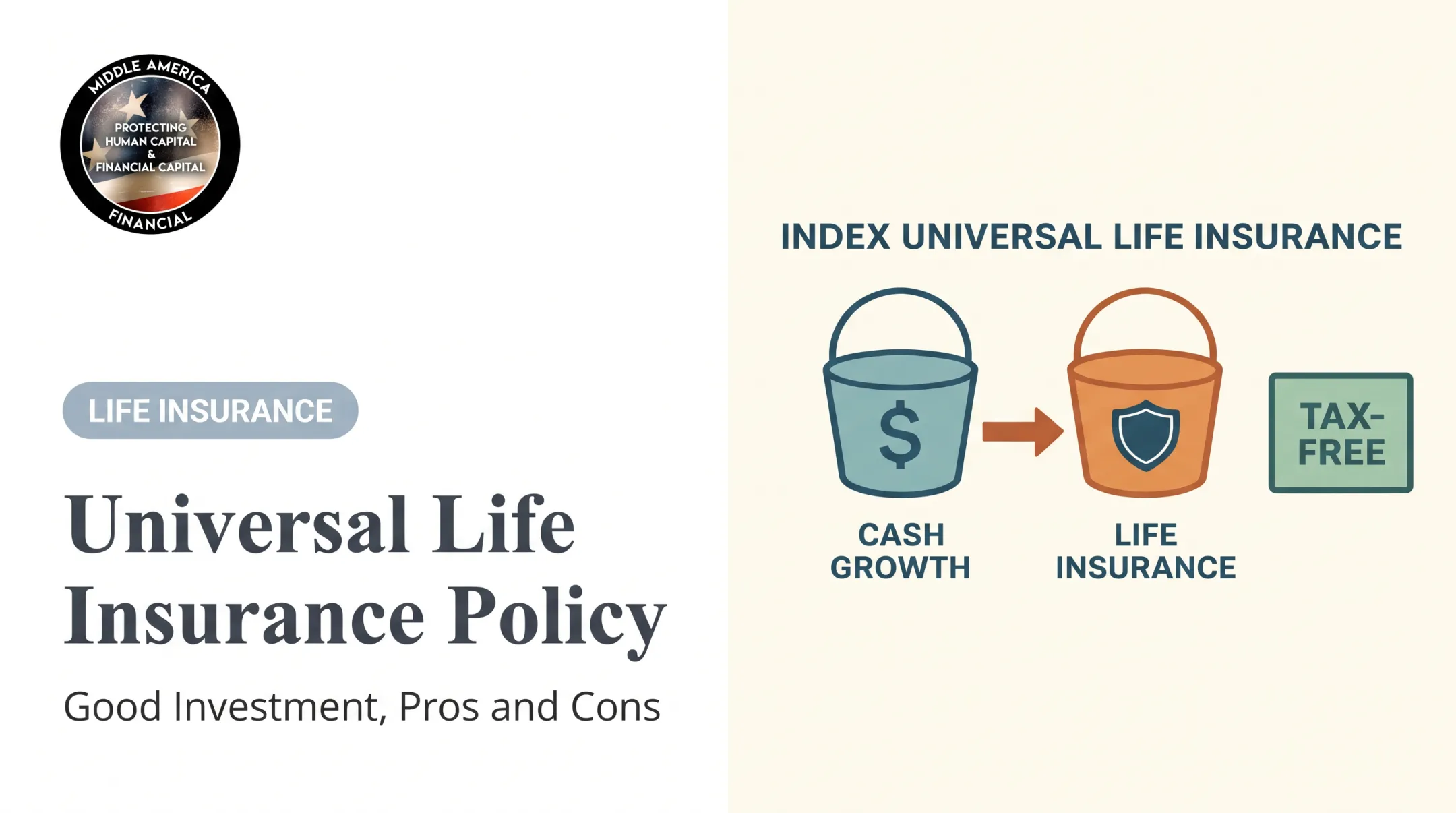
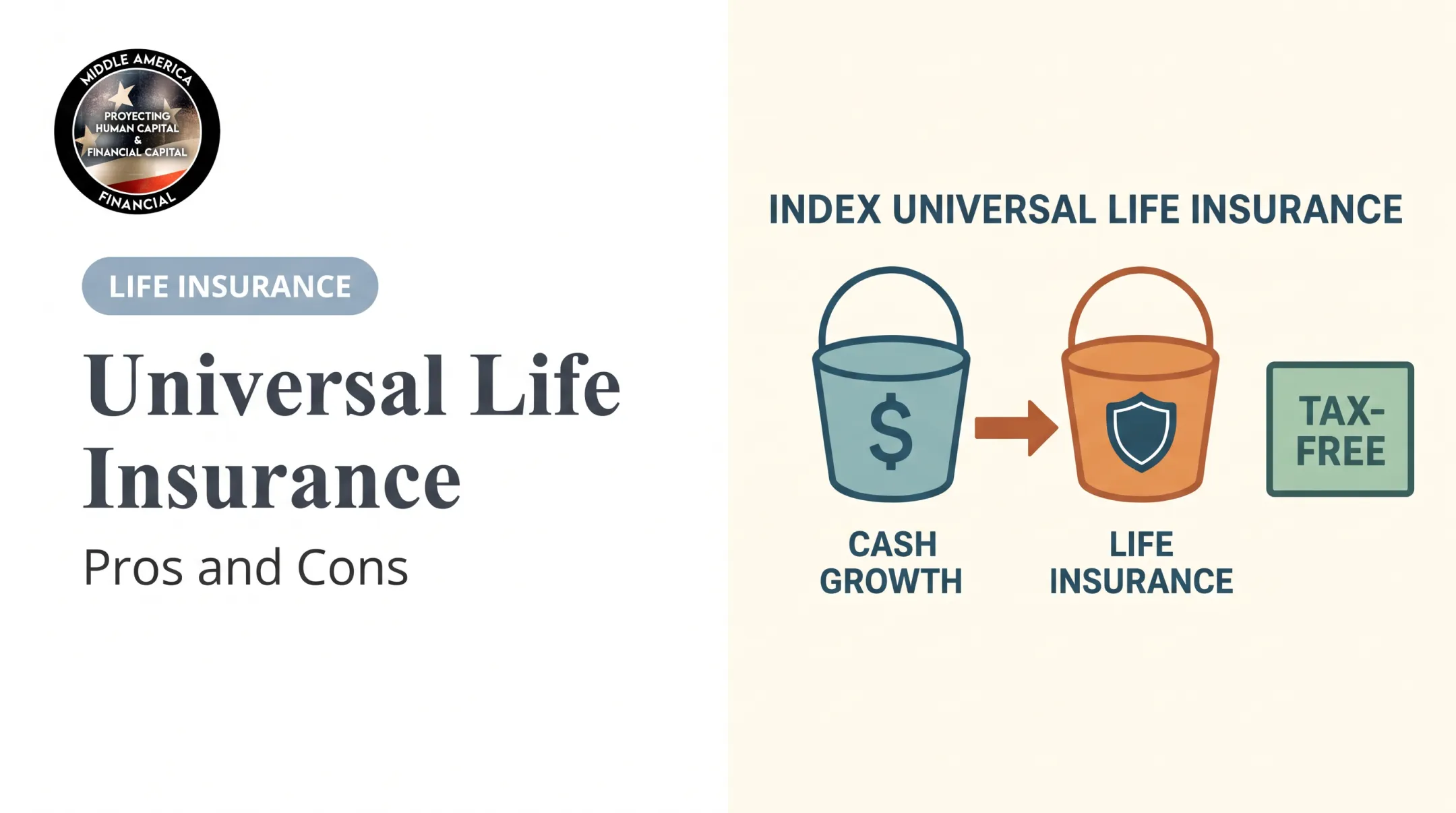
- Indexed universal life (IUL) — cash value is credited based on an index-linked formula, subject to policy-specific caps, floors, and participation rates.
- Variable universal life (VUL) — cash value is invested in subaccounts, carrying greater market risk and potential for loss.
- Guaranteed universal life (GUL) — provides a level death benefit for a guaranteed period, often through a no-lapse guarantee rider.

Some IUL designs, for example, guarantee coverage to at least age 80, with coverage available on a non-guaranteed basis up to age 120. Common riders worth reviewing include accidental death, waiver of premium, and living benefits for chronic or terminal illness.
Who It Fits
Universal life often appeals to buyers with changing income, evolving coverage needs, or business-planning goals. Common uses include:
- Final-expense and legacy planning
- Retirement income supplementation
- Mortgage protection
- Business-planning and key-person needs
It fits best when the owner is comfortable monitoring how funding assumptions play out over time.
Whole Life vs. Universal Life: Which Is Better?
Neither product wins for everyone. The better fit depends on a handful of personal factors:
- Purpose of the coverage (final expense, income replacement, legacy, business planning)
- Required duration (a set number of years vs. lifelong)
- Budget and how much flexibility you want
- Need for guarantees vs. comfort with monitoring performance
- Cash-value objective (supplemental savings, liquidity, or none)
When Whole Life Tends to Fit Better
Consider whole life if you want predictable premiums, a guaranteed cash-value ladder, a defined lifelong death benefit, and simpler long-term budgeting. It fits final-expense planning well, and anyone who prefers to set a policy and leave it alone.
When Universal Life Tends to Fit Better
Universal life suits buyers who need adjustable premiums or death benefits, expect changing finances, or want coverage tailored to a business plan. Plan on reviewing annual statements and in-force projections.
Don't Skip the Term-Life Checkpoint
If you're primarily looking for affordable income replacement or mortgage protection over a defined period, compare both permanent options against term life insurance before deciding. Term coverage often costs less upfront and may be the better fit for temporary needs.
Pre-Purchase Checklist
Before signing anything, request:
- Both guaranteed and current-value illustrations
- Cost-of-insurance assumptions and how they change with age
- Surrender charges and loan provisions
- Lapse scenarios under reduced funding
- Riders available and state-specific availability
- The issuing insurer's financial strength rating
Reviewing this against a single carrier's numbers only tells part of the story. Because Middle America Financial works through independent agents with access to more than 40 carriers, you can compare guaranteed values, riders, and pricing side by side instead of relying on one company's illustration.

An agent can walk through policy-specific guarantees, risks, and costs. No one should promise a single "best" answer without knowing your full situation.
Conclusion
Whole life generally favors guarantees and predictability. Universal life generally favors flexibility and customization. Neither should be chosen based solely on a first-year premium or a projected cash-value number that assumes decades of favorable performance.
Match the policy to:
- Your protection need
- Your funding capacity
- Your willingness to manage it over time
Then review the actual contract and illustration with a licensed insurance agent. Ask what happens under both best-case and worst-case assumptions before you commit.
Frequently Asked Questions
How much does a $100,000 whole life insurance policy cost?
Pricing depends on your age, health, underwriting class, state, policy design, and any riders. No single price fits every buyer. Compare like-for-like illustrations from multiple carriers before deciding.
How much does a $500,000 whole life insurance policy cost per month?
Monthly cost varies widely based on your health profile and how the policy is structured. Payment frequency, guarantees, and optional riders all affect the premium. Request personalized quotes rather than relying on general estimates.
Which is better, whole life or universal life insurance?
It depends on your goals. Whole life suits buyers who want guarantees and predictable payments, while universal life suits those who need flexibility and will actively manage funding over time.
Is it better to get whole life or term life insurance?
Term life often works well for temporary needs like income replacement or mortgage protection at a lower initial premium. Whole life fits lifelong protection goals paired with cash-value growth. Compare your coverage duration and objectives first.
Can I cash out my universal life insurance policy?
Yes, through surrender, withdrawals, or policy loans, each with different consequences. Surrender charges, reduced death benefits, accrued interest, and tax effects can all apply. Review your contract before taking any action.
What is another name for universal life insurance?
Universal life is commonly abbreviated as UL. Indexed universal life (IUL) and variable universal life (VUL) are distinct product types, not interchangeable names, and their features vary by carrier and policy.