Introduction
Choosing how to take a pension locks in your household's retirement income for decades, and you rarely get a second chance. Pension maximization means taking the higher single-life pension payment instead of a reduced joint-and-survivor option, then using individually owned life insurance to replace income for a surviving spouse if the pensioner dies first.
This guide is for U.S. married employees and pre-retirees comparing defined-benefit payout options. The decision shapes monthly income, survivor protection, taxes, and long-term security.
The strategy is often reduced to "buy insurance, take more pension." In practice, health, premiums, pension formulas, and survivor needs decide whether maximization beats a traditional joint-and-survivor election. Here's how it works, what changes the math, and when the joint option is the better call.
Quick Summary
- Pension max weighs a higher single-life payout against life insurance that can replace the lost survivor benefit
- Health, insurability, premiums, and plan rules—not spreadsheet math alone—decide whether it works
- Complete the analysis before your pension election becomes irrevocable
- Weight guarantees, exclusions, and carrier strength over any projected illustration
What Is Pension Maximization?
A single-life pension pays a higher monthly amount but generally stops when the retiree dies. A joint-and-survivor pension pays less each month but continues income to an eligible spouse after the participant's death.
Federal rules require the optional survivor annuity to be actuarially equivalent to a single-life annuity. The exact reduction is plan-specific—there's no universal percentage. Plans typically offer survivor options between 50% and 100% of the joint-life amount, so a "100% joint-and-survivor" election continues the full joint payment to the surviving spouse.
Pension maximization aims to take the larger single-life check while both spouses are alive, then replace the lost survivor benefit with a separately owned life insurance policy. The death benefit can fund ongoing income, investments, or an income annuity for the surviving spouse.
Important distinction: the life insurance policy doesn't recreate the pension contract. It introduces its own set of risks — underwriting decisions, premium obligations, beneficiary designations, and the claims-paying ability of the insurer — that a guaranteed pension annuity doesn't carry.
That gap shows up in real elections. A 2003 Urban Institute study prepared for the Society of Actuaries found that 28% of married men and 69% of married women elected single-life annuities rather than joint-and-survivor benefits—often without enough replacement protection in place.
Pension maximization isn't the only way to address the survivor gap. Related approaches include:
- Joint-and-survivor election: Trade higher current income for guaranteed continuation to the spouse
- Self-funding: Cover the gap with personal savings and investments instead of insurance
- Lump-sum payout: Where the plan allows it, take the lump sum and manage the funds independently
- Blend: Keep partial survivor protection and insure only the remaining gap
The strategy fits best when the pension is a meaningful share of guaranteed household income and the participant can qualify for—and sustain—adequate life insurance coverage.
How It Works and When It Is Used
Pension maximization follows a consistent process, even though every household's numbers look different.
- Request official pension estimates for both the single-life and available survivor-option payments from the plan administrator
- Calculate the after-tax monthly difference between the two payout options
- Define the spouse's income need if the pensioner dies first — Social Security, other assets, debts, housing, and health care
- Shop available life insurance to see what coverage and premium are realistically obtainable
- Compare total household outcomes under early-death and long-survivorship scenarios for both spouses

Estimating the Survivor Income Gap
The gap isn't just "the pension amount that disappears." It should account for:
- The percentage the survivor would have received under the plan's survivor option
- Other guaranteed income, such as Social Security
- Existing savings, debts, and housing costs
- Inflation over what could be a 20-30 year retirement
- How long the survivor will likely need supplemental income
Insurance proceeds can become ongoing income in two ways: invest the death benefit and draw it down, or buy a guaranteed income annuity. Either path depends on interest rates, the surviving spouse's age, taxes, and product fees at claim time. There's no fixed conversion rate you can count on in advance.
A Hypothetical Illustration
The table below is a simplified, hypothetical example only — not a projection of typical results.
| Scenario | Monthly Pension | Estimated Monthly Premium | Outcome if Participant Dies Early |
|---|---|---|---|
| Joint-and-survivor (75%) | $3,200 | $0 | Spouse continues receiving $2,400/month |
| Single-life + insurance | $3,800 | $180 | Spouse receives death benefit, no further pension income |
If both spouses live a long retirement, the single-life household keeps the extra $600 monthly but has paid premiums for years. If the participant dies early, the outcome depends on whether the policy was in force and adequately funded.
Timing Matters
- Start this review well before your retirement date — underwriting takes time
- Complete medical underwriting and confirm the policy is issued as applied for before relying on it
- Verify whether your pension election requires spousal consent and whether it becomes irrevocable at your annuity starting date
Because carrier appetite, underwriting standards, and pricing vary widely, working with an agent who can compare options across multiple insurers matters.
Middle America Financial's independent brokerage model gives agents access to life insurance products from more than 40 carriers, which can help identify coverage that fits a specific health profile and budget. Availability, underwriting outcomes, and policy terms still vary by applicant and state.
Key Factors and Risks
Several variables determine whether pension maximization actually protects your spouse or leaves a gap.
Health and insurability. Age, tobacco use, occupation, family medical history, and underwriting class all affect whether coverage is available and at what premium. If either spouse has a significant health condition, enough coverage may not be realistic.
Pension plan design. Review the plan’s survivor rules before you elect:
- Survivor percentage offered
- Cost-of-living adjustments
- Early-retirement reductions and payment guarantees
- Whether the election can change after you retire (some plans allow revocation only until the annuity starting date)
Financial assumptions. Don't rely on a single life expectancy estimate. According to the Society of Actuaries' 2024 mortality update, a 65-year-old male in 2025 has a cohort life expectancy of roughly 19.3 years, and a female roughly 21.9 years. These are projections, not guarantees for any one person.
Use a range of ages, and stress-test the numbers against inflation and after-tax income rather than gross figures.
Life insurance structure. Compare policy types by their actual contract terms:
- Death-benefit duration (term vs. permanent)
- Level or adjustable premium schedules
- Cash-value access and lapse risk
- Riders and exclusions
- Whether coverage stays adequate as costs rise
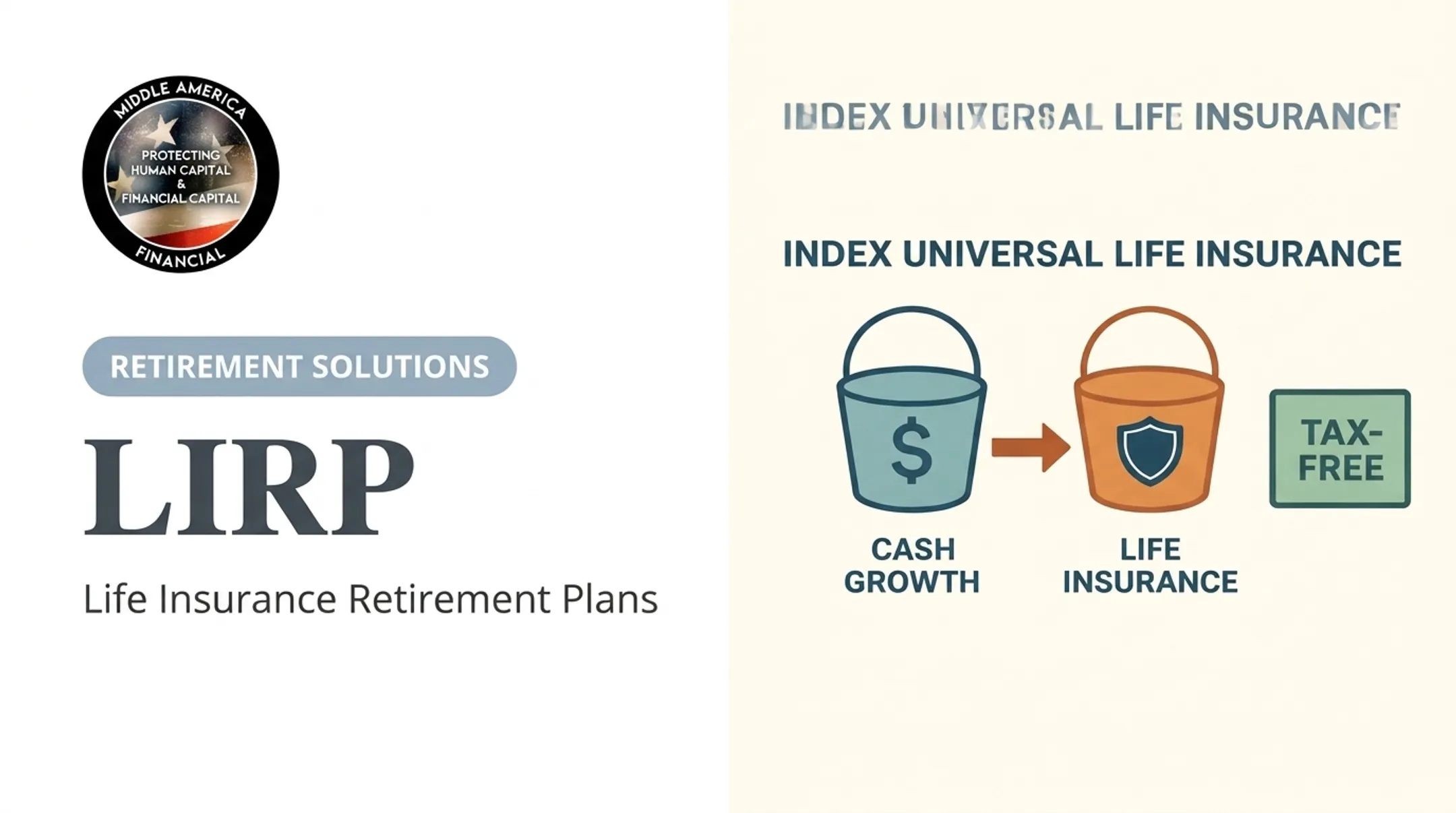
Whole life offers permanent coverage with cash value that accumulates at a guaranteed fixed rate, typically 1%–3%. Index Universal Life ties growth to an index such as the S&P 500 and can last a lifetime if it stays properly funded. Underfunded policies can lapse, so funding discipline matters as much as the product type.

Tax and estate considerations. Pension income, life insurance proceeds, policy loans, and annuity purchases can all receive different tax treatment. A qualified tax professional should review your specific situation before you finalize an election.
Carrier and policy due diligence. Before you buy, verify:
- Financial-strength ratings from more than one rating agency
- Illustrations that show guaranteed versus non-guaranteed values
- What happens if a premium payment is missed
Common Issues and When It May Not Be Appropriate
A few misconceptions cause the most costly pension-max mistakes:
- Assuming the higher pension payment automatically covers the insurance premium
- Believing life insurance proceeds replace a survivor pension dollar-for-dollar
- Treating a policy illustration as a guaranteed outcome rather than a projection
Common implementation mistakes include:
- Applying for coverage too late in underwriting
- Buying an insufficient face amount
- Ignoring taxes and inflation in the math
- Overlooking plan-specific rules
- Letting a policy lapse after issue
A joint-and-survivor pension may be the better choice when:
- The participant can't obtain suitable coverage due to health
- Premiums aren't affordable long-term
- The surviving spouse needs guaranteed, inflation-protected income
- Longevity risk in the family is significant
- The numbers only show a narrow advantage either way

About the "6% Rule"
You may have heard of a "6% rule" applied to pensions. This isn't a pension-maximization formula at all. It traces back to retirement withdrawal-rate discussions — Morningstar has noted that retirees comfortable with spending fluctuations might start withdrawals near 6% from an investment portfolio, based on a 30-year time horizon. It has nothing to do with QJSA calculations or insurance sufficiency. Don't use it as a shortcut — run plan-specific cash-flow and longevity analysis instead.
Because so many variables interact, confirm the numbers with your pension administrator, a licensed insurance professional, a financial planner, and a tax advisor before you lock in an election.
Conclusion
Pension maximization trades a reduced survivor benefit inside your pension for a higher personal payment plus a separately owned life insurance policy meant to protect your spouse. Whether that trade works depends on a few practical factors:
- Adequate life insurance coverage for your spouse
- Premiums you can afford long term
- Realistic assumptions about health and longevity
- How much your family values guaranteed certainty over flexibility
The right choice depends on your pension terms, health, and household needs.
If you're weighing this decision, Middle America Financial's independent agents can compare life insurance options across more than 40 carriers. They can also coordinate that review with your pension administrator, tax professional, and attorney where appropriate. Reach out for a personalized review before your election becomes final.
This article is educational in nature and does not constitute individualized financial, tax, legal, or insurance advice. Speak with qualified professionals about your specific situation.
Frequently Asked Questions
Is pension maximization with life insurance a good idea?
It can work for some households. Fit depends on your pension terms, both spouses' health and insurability, premium affordability, and whether you prefer guaranteed income or flexibility. Run the numbers before you decide.
How much is a $100,000 pension worth per month?
It depends on whether $100,000 is an annual benefit or a lump sum. If annual, divide by 12 for roughly $8,333 gross per month, before taxes, survivor reductions, and any cost-of-living adjustments are applied.
What is the 6% rule for pensions?
The commonly cited "6% rule" comes from retirement portfolio withdrawal-rate research, not pension math. It is not a universal test for pension maximization. Use plan-specific cash-flow and longevity analysis instead.
What happens to the life insurance policy if my spouse dies first?
The policy continues under its existing contract terms. As the owner, you may change beneficiaries, reduce coverage, cancel it, or keep it for estate purposes. Review ownership and beneficiary designations before you make changes.
How much life insurance do I need for pension maximization?
Size coverage to your spouse's after-tax income gap, how long support may be needed, inflation, other income and assets, and current annuity pricing. Avoid a generic multiple of the pension amount.