The problem? IUL gets lumped in with whole life insurance and direct market investing, and the three work very differently. This article breaks down how IUL actually works, where it shines, where it falls short, and how to tell if it fits your financial picture.
Quick Summary
- IUL is permanent life insurance with cash value linked to a market index, not a direct investment in stocks
- Growth is tax-deferred with a downside floor (often 0%), but caps and participation rates limit your upside
- Loans and withdrawals can be tax-advantaged, but mismanaging them risks a policy lapse
- Best suited to high-income earners and business owners who've maxed out other tax-advantaged accounts
What Is an IUL and How Does It Work?
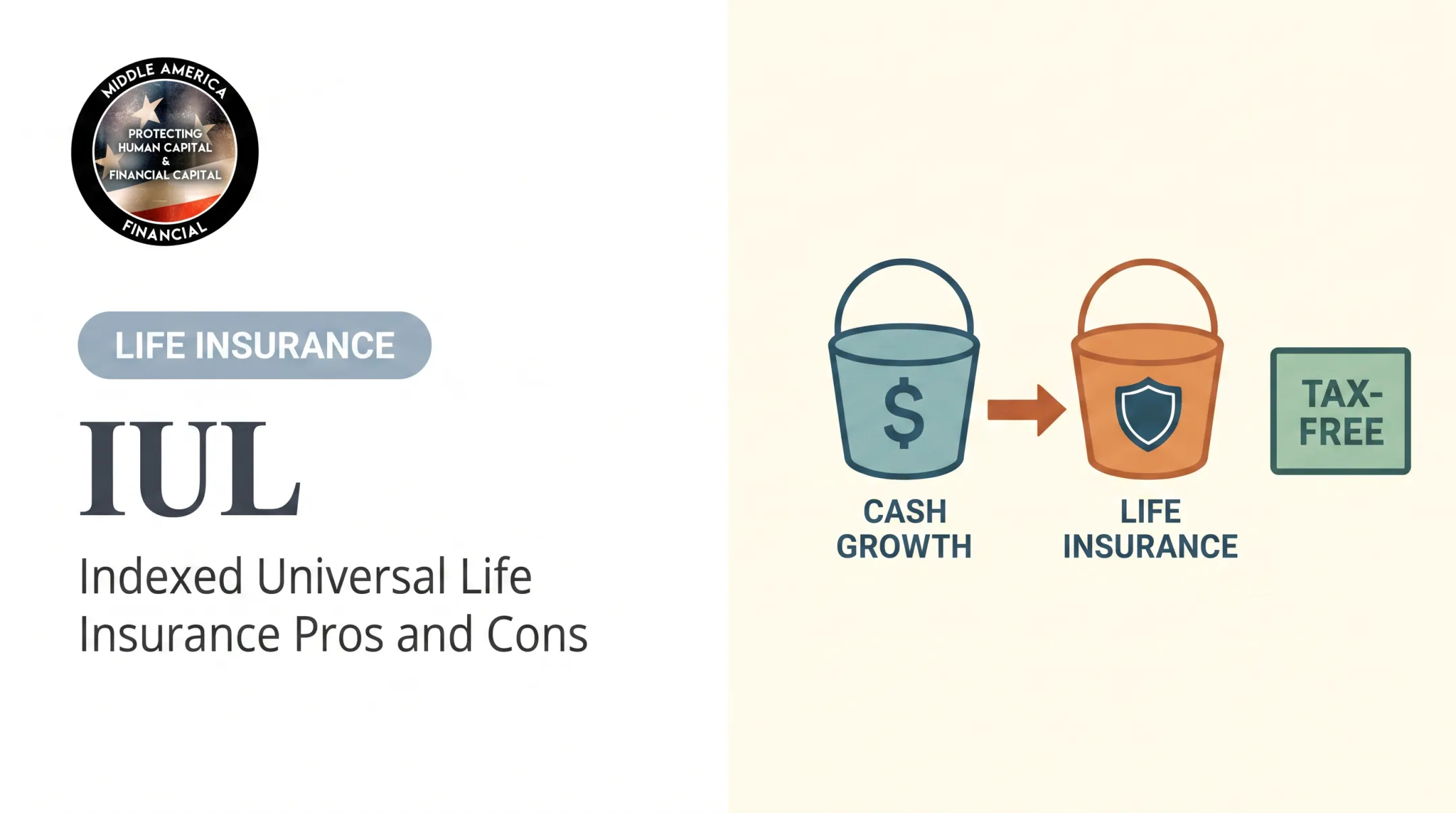
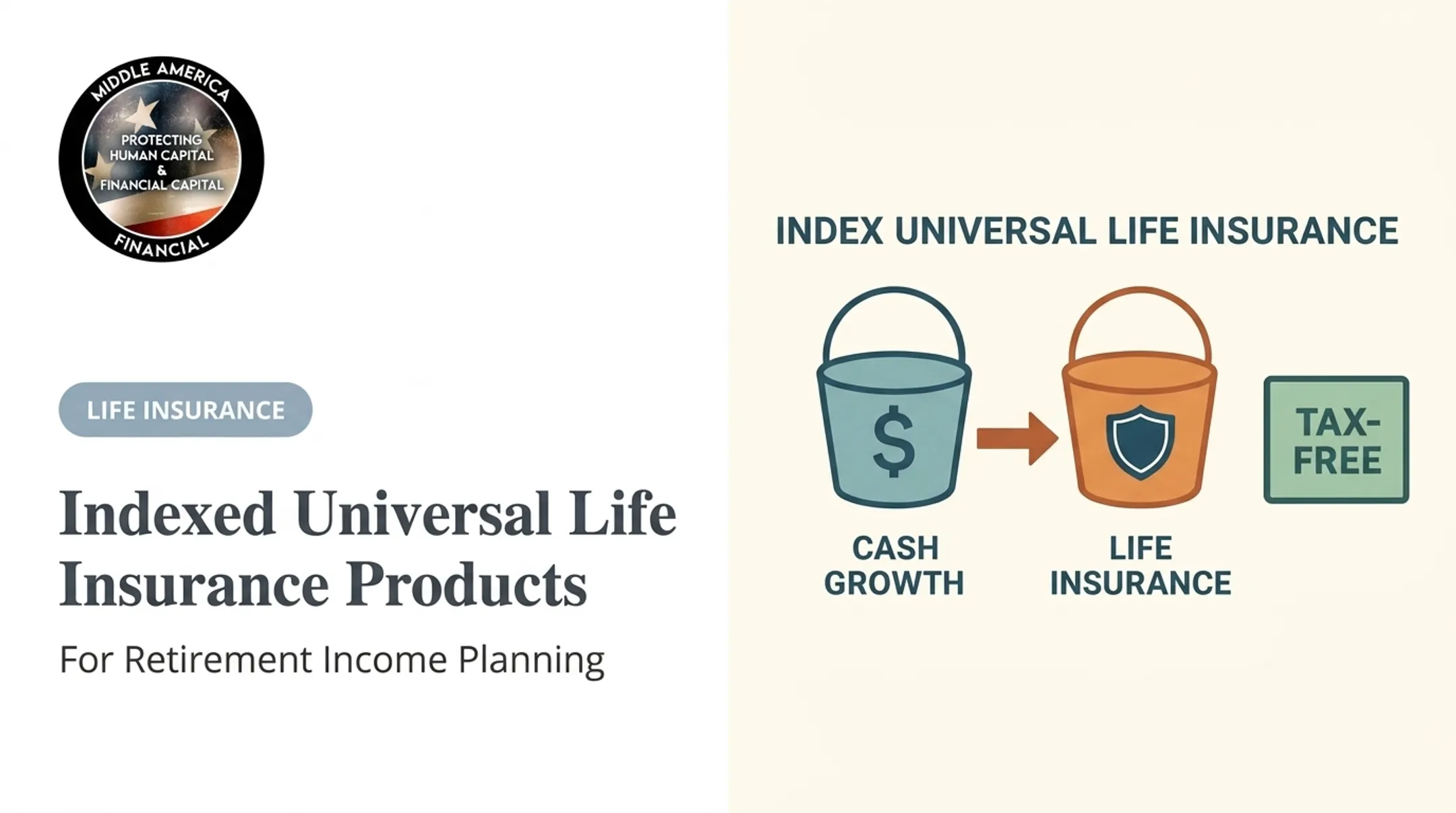
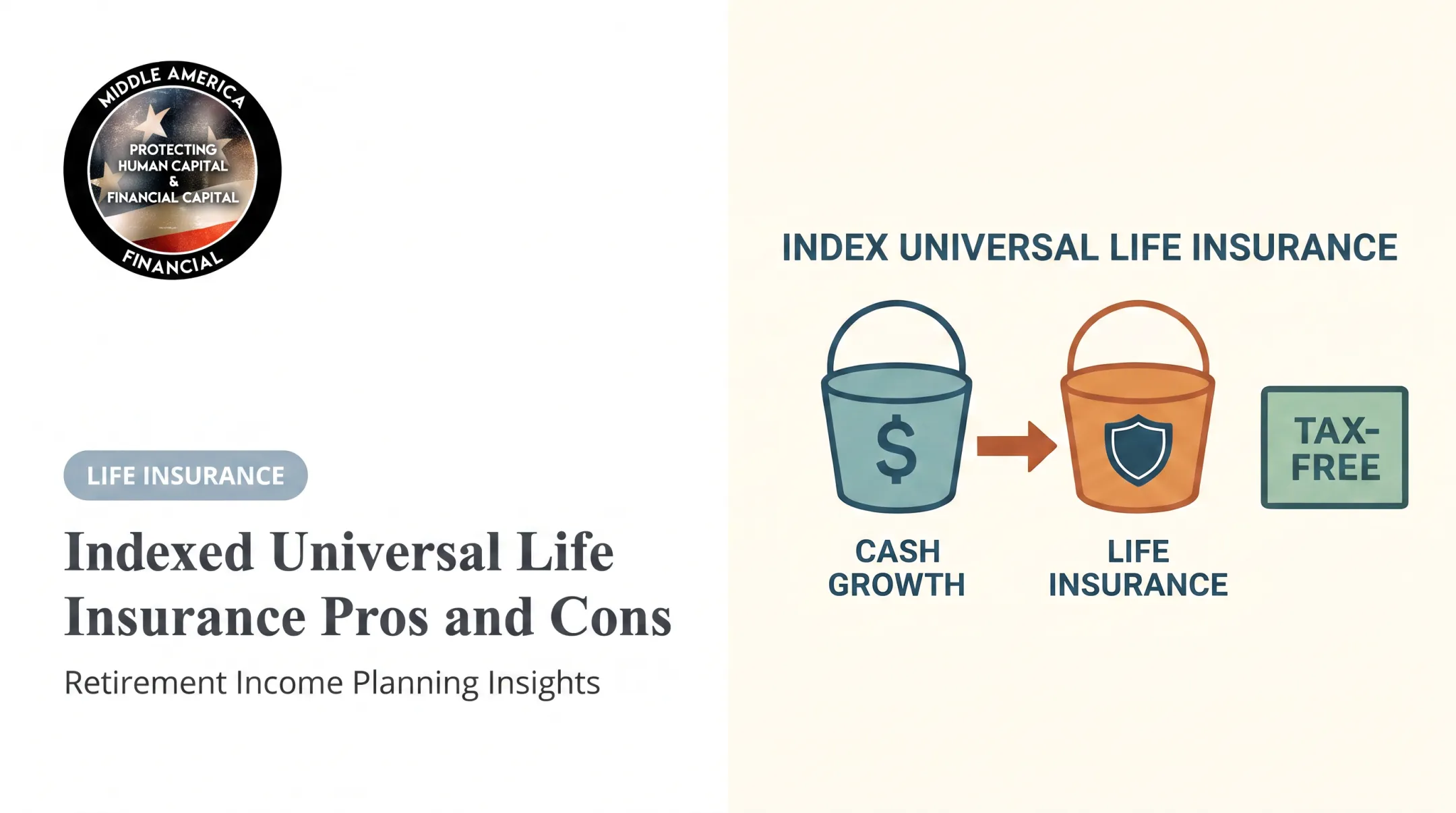
An IUL is permanent life insurance. It pairs a death benefit with a cash value account that earns interest tied to a market index, such as the S&P 500.
Your money is not invested in the index itself. According to Kiplinger, index performance only determines how much interest gets credited to your account.
Where Your Premium Goes
Each premium payment gets split:
- A portion covers the cost of insurance and administrative fees
- The remainder goes into your cash value account, where it can earn indexed interest
The Mechanics: Caps, Floors, and Participation Rates
Three terms control how much interest you actually earn:
- Cap rate: the maximum interest that can be credited, even if the index gains more
- Participation rate: the share of index gains credited to your account
- Floor: the guaranteed minimum credited rate, typically 0%
Say your policy has an 8% cap and a 100% participation rate. If the index climbs 12% in a year, you're credited 8%, not 12%. If the index drops 15%, the floor keeps that loss from hitting your cash value.

Monthly insurance charges can still reduce cash value even when the floor holds. Most carriers also let you split funds between a fixed-rate account and an indexed account, so you can choose how much of each premium is exposed to index-linked crediting.
IUL Pros and Cons
IUL has clear trade-offs. Whether they fit depends on your goals, risk tolerance, and how the policy is funded.
| Pros | Cons |
|---|---|
| Tax-deferred cash value growth | Fees and cost-of-insurance charges reduce net returns |
| Downside floor (often 0%) | Caps limit gains even in strong market years |
| Flexible premiums and death benefit | Requires active management to avoid lapse |
| Death benefit is generally income-tax-free | Complexity makes comparison shopping harder |
| Potential for higher returns than whole life | Underfunding risks losing the policy entirely |
Variable universal life (VUL) puts cash value directly into securities and can lose money with the market, as the SEC notes. IUL does not. That lower volatility is also why gains are capped in strong market years.
Costs, Withdrawals, and How IUL Pays Out
What Drives Your Premium
Several factors determine what you'll pay:
- Age at issue – younger applicants generally lock in lower costs
- Health classification – preferred, standard, or rated classes based on underwriting
- Coverage amount – higher death benefits mean higher costs
- Funding level – how aggressively you fund the policy above the minimum
Because pricing varies significantly by carrier and health profile, a personalized illustration is the only reliable way to see actual numbers for your situation.
How Loans and Withdrawals Work
Policy loans are generally tax-free as long as the policy stays in force. Unpaid loans accrue interest and reduce your death benefit. If the loan balance grows large enough relative to your cash value, the policy can lapse — and that can trigger an unexpected tax bill on the gain.
Withdrawals are different: they permanently reduce both cash value and death benefit, so partial withdrawals lower what your beneficiaries receive even if you never take another dollar out.
Surrender charges also affect access to cash value. Schedules vary by carrier and policy, sometimes running 10 years or longer depending on issue age. Check your specific contract rather than assuming a fixed timeline for penalty-free access.

How the Payout Works
When the insured passes away, beneficiaries receive the death benefit. This is generally income-tax-free. Any cash value the policyholder hasn't already accessed through loans or withdrawals is typically absorbed into that death benefit rather than paid out separately.
Are IULs Tax-Free? Understanding the Tax Advantages
Short answer: not entirely. IUL cash value grows tax-deferred, not tax-free. You don't pay taxes on gains year to year, but if you surrender the policy, any gain above what you paid in premiums becomes taxable, according to IRS Publication 525.
Here's where it gets more favorable:
- Policy loans are generally tax-free while the policy stays active
- Death benefits are typically free from federal income tax
- Gains only become taxable if the policy lapses or gets surrendered
Avoiding MEC Status
One risk that trips people up: overfunding a policy too aggressively in its early years can trigger Modified Endowment Contract (MEC) status. Under IRS rules, a MEC fails the "7-pay test" if you pay in too much too fast during the first seven years.
Once a policy becomes a MEC, loans are taxed income-first, and early distributions can face an extra 10% penalty. Business owners and high-income earners who want tax-efficient retirement income need funding schedules that stay clear of that line. Middle America Financial's independent agents help structure those schedules around your income, timeline, and carrier options.
IUL vs. 401(k), Roth IRA, and Other Investment Options
IUL and retirement accounts solve different problems, which is why comparing them head-to-head can be misleading.
401(k)s and Roth IRAs are investment-first vehicles with lower built-in fees and hard annual contribution caps. IUL is insurance-first: no statutory contribution limit, but fees and crediting caps are built in. That mix is why it often appeals to people who have already maxed out traditional accounts.
| Feature | 401(k) | Roth IRA | IUL |
|---|---|---|---|
| Primary purpose | Retirement investing | Retirement investing | Life insurance + cash value |
| 2025 contribution limit | $23,500 (+$7,500 catch-up, age 50+) | $7,000 (+$1,000 catch-up, age 50+) | No statutory cap |
| Income phase-outs | Generally no (plan-driven) | Yes, for higher earners | No IRS contribution phase-out |
| Downside protection | Market risk applies | Market risk applies | Typical 0% annual floor on indexed credits |
| Regulation | ERISA / IRS | IRS | State insurance regulators (not SEC) |

Contribution figures above follow IRS Notice 2024-80.
Raw return potential still favors broad equity exposure. The S&P 500 has averaged roughly 10% annually since 1957, per Fidelity. IUL crediting caps usually mean you capture a smaller slice of a strong year, in exchange for that 0% floor in down years.
IUL is not a security. It is not SEC-regulated the way mutual funds or ETFs are, which is why illustrations show "non-guaranteed" projected values next to guaranteed minimums.
IUL works best as a complement to traditional retirement accounts, not a replacement for them.
Is an IUL a Good Investment for You?
An IUL is permanent life insurance with a cash-value component—not a pure investment. It fits some situations well and others poorly.
Good fit if you're:
- A high-income earner who's already maxed out 401(k) and IRA contributions
- A business owner looking for tax-advantaged ways to build supplemental retirement income
- A pre-retiree wanting downside-protected growth alongside other retirement assets
Probably not a fit if you're:
- A young family needing the maximum death benefit at the lowest possible cost (term life usually wins here)
- Someone who wants simple, guaranteed growth without ongoing policy management
- Someone who can't fund the policy consistently enough to avoid lapse risk
Because IUL structures, caps, and participation rates vary widely by carrier, comparing illustrations matters. Middle America Financial works with independent agents across a network of 40+ carriers nationwide, so you can review multiple illustrations side by side instead of relying on one company's numbers.
Frequently Asked Questions
How much does an IUL cost?
Cost depends on your age, health, coverage amount, and how much you fund above the minimum premium. A personalized illustration from a licensed agent is the only reliable way to get your number.
Can I withdraw money from my IUL?
Yes. Loans and withdrawals both reduce cash value and death benefit. Loans are usually tax-free if the policy stays in force, but unpaid loans can lapse the policy and trigger taxes.
How does an IUL pay out?
The death benefit goes to your beneficiaries income-tax-free. Remaining cash value you have not withdrawn or borrowed against becomes part of that payout—it is not paid out separately.
Are IULs tax-free?
Not entirely. Growth is tax-deferred, and loans are tax-free if the policy stays in force. Surrendering the policy can trigger taxes on gains above premiums paid.
What is the average rate of return on an IUL?
Returns depend on your policy’s cap rate, participation rate, and index performance. Ask for a carrier-specific illustration instead of relying on generic averages.
Is an IUL better than a 401(k) or Roth IRA?
They serve different purposes. Most people use an IUL alongside retirement accounts—especially after maxing annual contribution limits—not as a replacement.