But flexibility comes with a catch. The same features that make universal life attractive also add cost, complexity, and ongoing responsibility that term life insurance simply doesn't require.
So here's the real question you need to answer: Do you need lifelong coverage and the ability to adjust your policy as life changes? Or are you looking for affordable income and mortgage protection for a defined period, like 20 or 30 years?
This article breaks down how universal life insurance works, weighs its pros and cons, compares it against term and whole life, and gives you the questions to ask before you sign anything.
Quick Summary
- Universal life offers lifelong coverage, adjustable premiums, and cash value—only if the policy stays properly funded
- Flexible premiums aren't free; underfunding, fees, or weak crediting can drain cash value and cause a lapse
- Estate planning, business succession, or wealth transfer may justify it; it isn't the default for every household
- Compare guaranteed values to illustrated projections, factor in fees and lapse risk, and weigh term life too
What Is Universal Life Insurance and How Does It Work?
Universal life insurance is permanent coverage designed to stay in force for your entire life, or to a stated maturity age, as long as you meet the required premiums and policy conditions. Unlike term life, it doesn't expire after 10, 20, or 30 years.
According to the National Association of Insurance Commissioners, universal life combines term-style insurance protection with a cash account that earns interest without current taxation. That mix is what makes the policy flexible—and more complex to manage than term coverage.
Premiums, Charges, and Cash Value
Each premium payment gets divided among several buckets:
- Cost of insurance: the mortality charge for your death benefit
- Administrative fees: flat or percentage-based charges for maintaining the policy
- Rider charges: costs for optional add-ons such as accelerated death benefits
- Cash-value contribution: whatever remains after charges are deducted
Pay more than required, and your cash value grows faster. Pay less, and your existing cash value has to cover the shortfall in charges. Do that too long without enough cash cushion, and your coverage is at risk of lapsing.
Death Benefit Options and Policy Guarantees
Most universal life policies let you choose between a level death benefit (a fixed payout) or an increasing death benefit (payout plus accumulated cash value). Switching between them later may require new underwriting and can change your costs.
Separate what's guaranteed from what's projected. NAIC Model Regulation #582 requires basic illustrations to show guaranteed and non-guaranteed elements side by side. Guarantees are locked in at issue; everything else reflects current assumptions that can change.
Four Types of Universal Life
- Traditional UL: insurer-declared interest rate, typically without a secondary guarantee
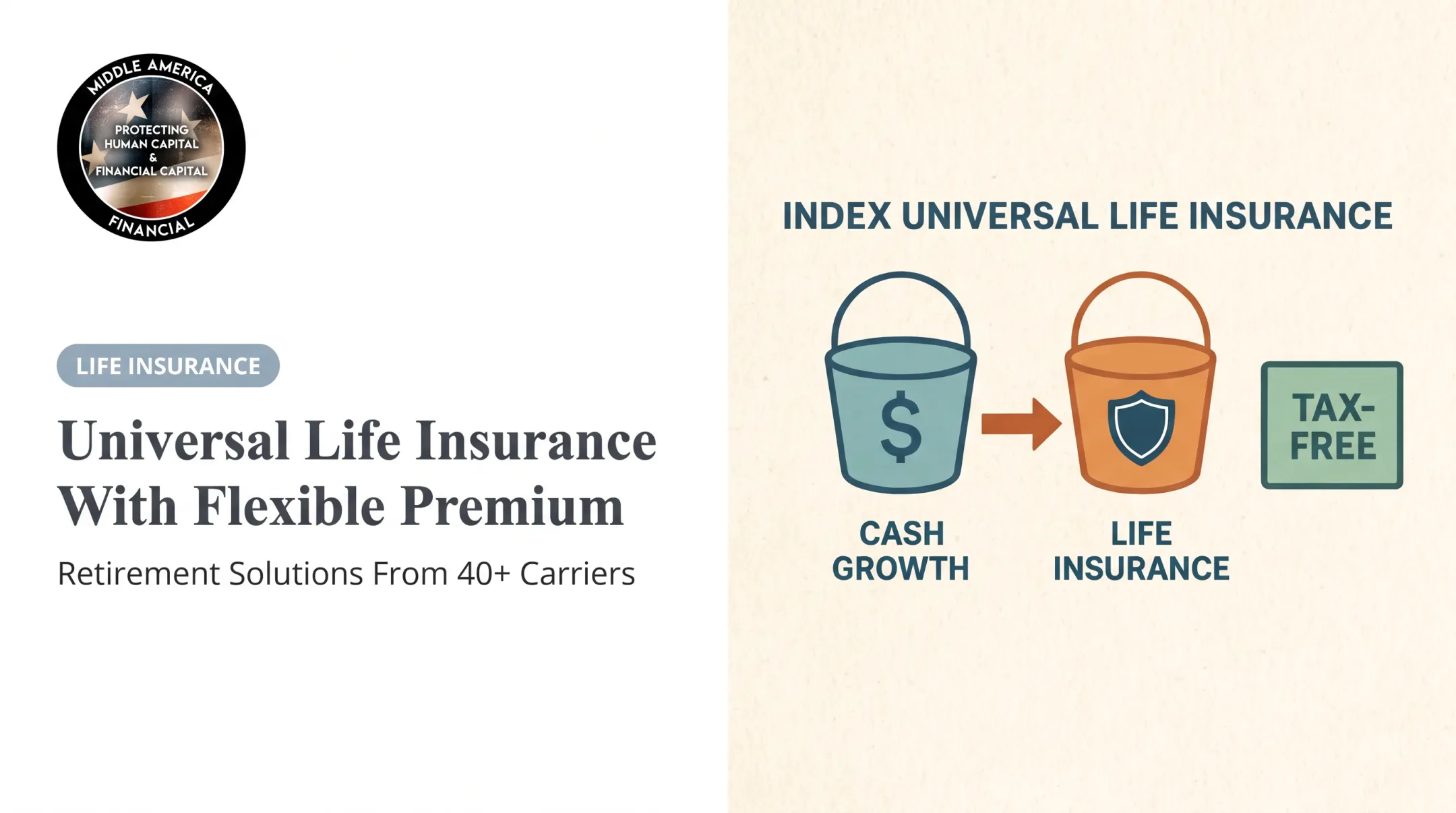
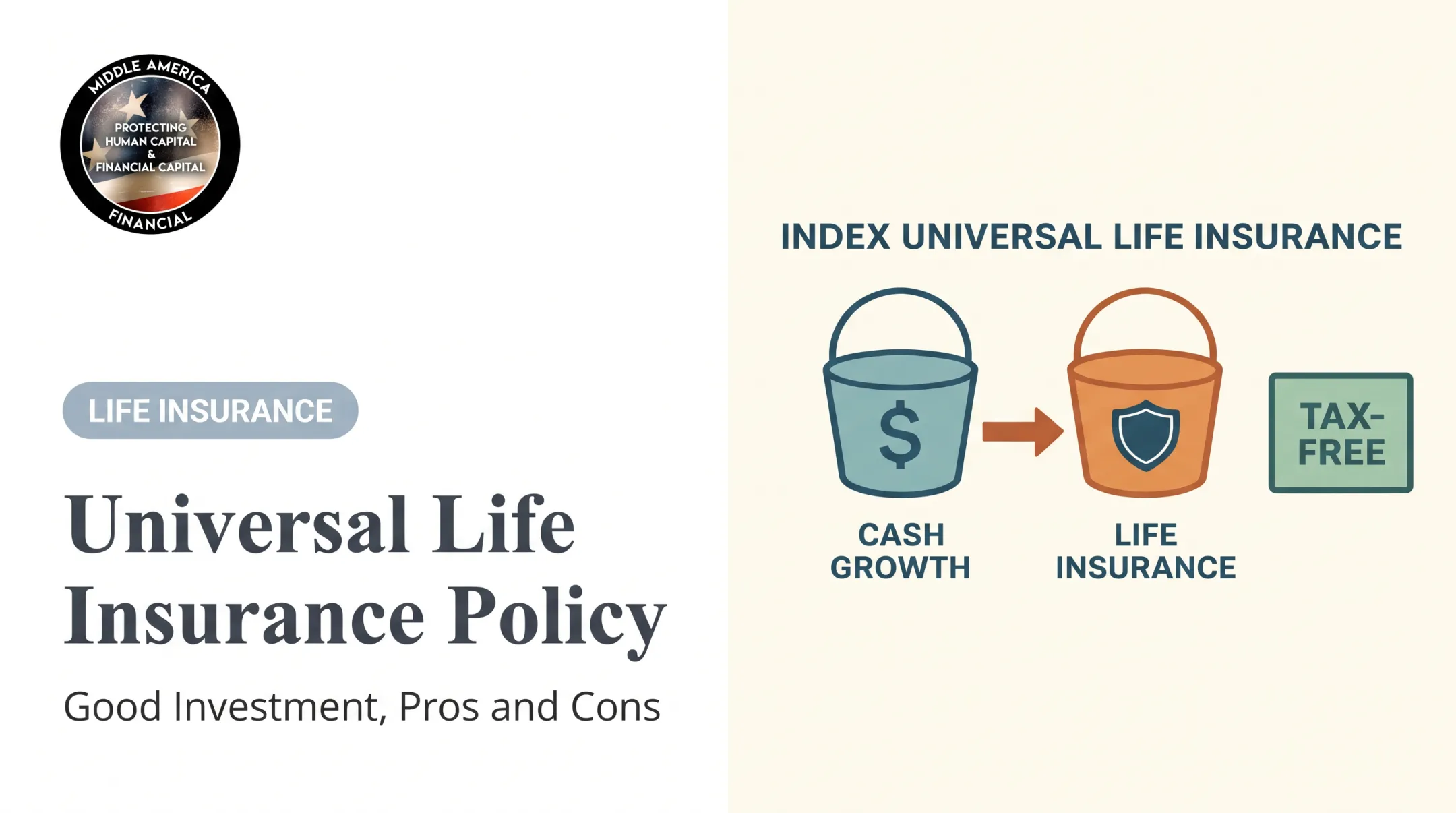
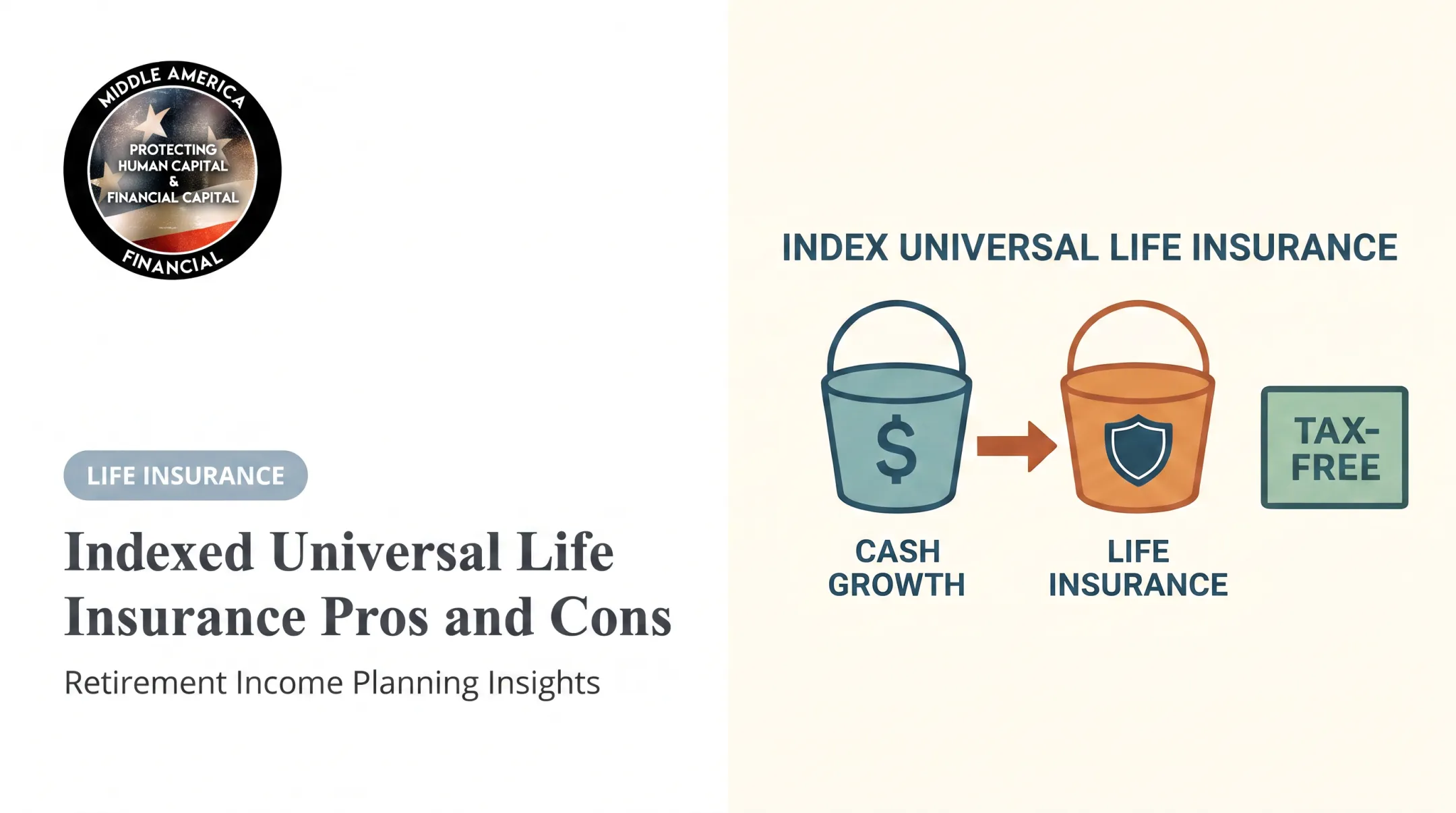
- Indexed UL (IUL): interest credited from an index such as the S&P 500, using a cap and floor—not direct market ownership
- Variable UL (VUL): cash value in investment subaccounts; returns aren't guaranteed and can decline
- Guaranteed UL (GUL): fixed premiums, a guaranteed death benefit, and little or no cash value
Which type fits depends on whether you prioritize cash growth, guarantees, or premium flexibility. Middle America Financial's Index Universal Life options, for example, credit interest off insurer-selected indexes such as the S&P 500, Nasdaq Composite, or US Pacesetter, and are often used for legacy planning, retirement supplementation, and final expenses.

Pros of Universal Life Insurance
For the right buyer, universal life solves problems term insurance can't touch.
- Genuine lifelong coverage. For permanent needs—estate liquidity, final expenses, or business continuation—coverage stays in force for life instead of expiring after a set term.
- Premium flexibility for variable income. Business owners, commissioned salespeople, and self-employed buyers can lower payments in lean months when existing cash value covers the shortfall.
- Adjustable death benefit. Coverage can flex up or down as family obligations or business responsibilities change, though increasing coverage typically requires new evidence of insurability.
- Cash-value access. Withdraw or borrow against cash value for emergencies or supplemental income—loans accrue interest, and unpaid balances reduce the death benefit.
- Tax-deferred growth. Cash value generally grows without current taxation, and death benefits are typically income-tax-free to beneficiaries—confirm details with a tax professional.
A common use case: business owners funding a buy-sell agreement. Death benefits can help a surviving partner buy a deceased owner's share from the estate.
Cons of Universal Life Insurance
Universal life is almost always more expensive and more complicated than term life. You're funding two things at once—the insurance itself and a cash-value component—and both carry ongoing charges.
Costs and Fees to Review
Ask for a full breakdown of:
- Cost of insurance (rises as you age)
- Administrative and per-policy fees
- Investment or subaccount fees (VUL specifically)
- Rider charges
- Surrender charges
- Policy-loan interest
Lapse Risk You Can't Ignore
Lapse risk is the biggest danger most buyers underestimate. The Society of Actuaries and LIMRA's multi-year lapse study, covering 24 companies and 33.5 million policy exposures, recorded 1.3 million lapse terminations, with rates climbing noticeably after policy year 15.
Maryland's Insurance Administration puts it plainly: if your premium and cash value together can't cover rising insurance costs, you'll need to pay more or reduce your death benefit, or the policy lapses.
That's a real consequence, not a hypothetical one. A lapse can mean:
- Total loss of coverage
- Taxable income on any gain above your policy basis
- Difficult (and costly) reinstatement requirements

Investment Risk Varies by Type
Not all universal life carries the same risk profile. A traditional UL policy relies on an insurer-declared rate. IUL uses an indexed crediting formula: you don't directly own the index, and returns aren't guaranteed to match it. VUL performance depends entirely on subaccount investments, which can lose value.
Never rely solely on a sales illustration. Ask for the guaranteed column, stress-test a low-performance scenario, and understand exactly what happens if you surrender, borrow against, or underfund the policy.
Withdrawals reduce both cash value and your death benefit. They can also trigger surrender charges or taxable income, depending on how the transaction is structured.
How Does Universal Life Compare With Term and Whole Life Insurance?
Match the policy structure to your actual need. Term, whole, and universal life each solve different problems.
| Feature | Term Life | Whole Life | Universal Life |
|---|---|---|---|
| Duration | Fixed term (10, 20, 30 years) | Entire life | Entire life, or to a stated maturity age |
| Premiums | Lower, may rise at renewal | Fixed and predictable | Flexible, but funding requirements can shift |
| Cash value | None | Guaranteed, fixed rate (roughly 1%-3%) | Variable, tied to policy type and performance |
| Complexity | Low | Moderate | High |
| Best for | Temporary needs: mortgage, income replacement | Predictable permanent coverage | Flexibility with active, long-term monitoring |
A few practical notes:
- Term life fits mortgage protection, income replacement, and key-person coverage where the need has a clear end date. Once the term expires, you can typically renew, convert, or let it terminate.
- Whole life fits people who want permanent coverage with guaranteed cash-value growth and no surprises in their premium bill.
- Universal life fits buyers with a lifelong need who can actively manage funding over decades. Guaranteed Universal Life, for example, locks in a level death benefit to age 80–120 with little or no cash value.
Who Might Consider Universal Life Insurance?
Universal life tends to make sense for narrower situations, not as an everyday replacement for term coverage. Potential use cases include:
- Estate liquidity to cover taxes or settlement costs
- Business succession or key-person planning
- Lifelong dependent-care obligations
- Wealth-transfer strategies across generations Higher-income individuals and business owners typically explore permanent coverage only after they review core protection needs, retirement accounts, and liquidity. They also need a clear sense of how much ongoing funding they're willing to manage. Before applying, ask an insurance professional:
- What's actually guaranteed in this policy, versus projected?
- What assumptions drive the illustration I'm looking at?
- How could my costs change over the next 10, 20, or 30 years?
- What happens to my coverage under a low-performance scenario?
- How are loans and withdrawals treated, and what do they cost me?
- What are the surrender charges and lapse consequences? Compare multiple carriers and policy designs rather than settling on the first illustration you see. Middle America Financial's independent-agent model gives U.S. families, business owners, and wealth-focused buyers access to options from more than 40 carriers, including Americo, National Life Group, Mutual of Omaha, and Transamerica. You can compare guarantees, fees, and riders side by side. The right recommendation always depends on your circumstances and what's available in your state.

Frequently Asked Questions
Is universal life insurance worth it?
It can be worthwhile if you have a clearly defined lifelong, estate, or business-planning need. For many households, though, the cost, complexity, and funding risk make term life or another simpler option a better fit.
Which is better, term or universal life insurance?
Neither wins outright. Term life prioritizes affordable, temporary protection. Universal life offers permanent coverage and cash-value features, along with more complexity and funding responsibility.
What are the biggest disadvantages of universal life insurance?
The main drawbacks are fees, variable performance, ongoing monitoring, lapse risk, and surrender charges. Accessing cash value can also reduce your death benefit or trigger taxes.
Can universal life insurance premiums change over time?
Yes. Flexible premiums don't mean fixed costs. Required funding can shift based on policy charges, cash-value performance, and any changes you make to your coverage.
What happens if a universal life insurance policy lapses?
You risk losing coverage entirely. Reinstatement usually requires back premiums plus interest. Surrendering the policy instead can create a taxable event, so talk to a licensed insurance professional before you stop paying.