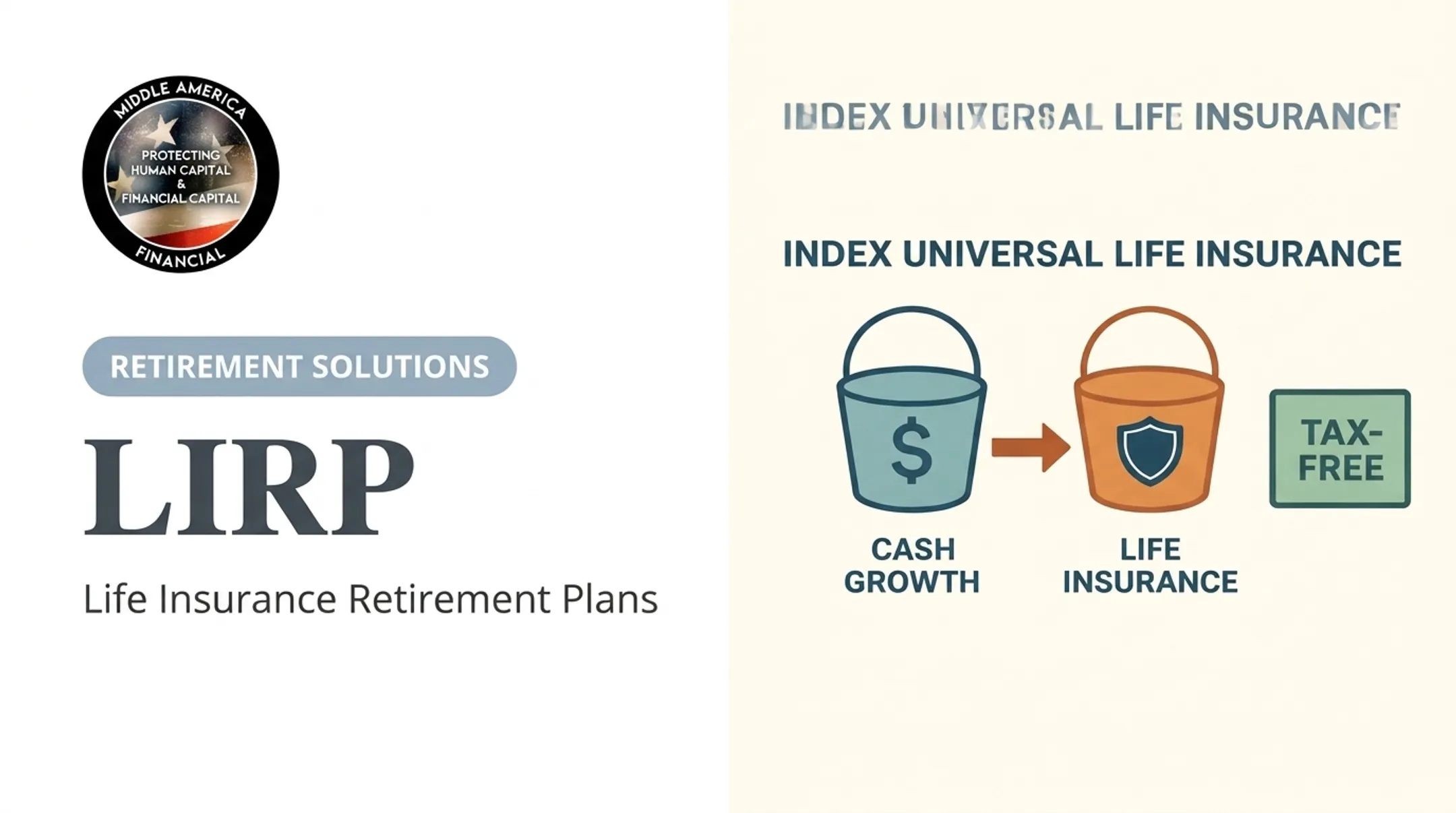
Here's the direct answer: whole life insurance can supplement retirement income and provide lifelong protection, but it's not a substitute for a 401(k), IRA, or a diversified investment portfolio. Whether it fits your plan depends on your need for permanent coverage, your ability to keep up with premiums, your time horizon, and your existing assets.
This article breaks down how cash value works, the ways policyholders access it, the real benefits and risks involved, and who tends to be a good fit. We'll also cover questions worth asking before you buy a policy or lean on one you already own.
Quick Summary
- Whole life insurance pairs a permanent death benefit with cash value you can access while you're alive.
- Withdrawals and loans reduce cash value and the death benefit, and can trigger taxes if the policy lapses.
- Whole life works best as one piece of a broader retirement strategy, not a replacement for tax-advantaged accounts.
- Guarantees rely on paying premiums on time and the insurer's financial strength; dividends are never guaranteed.
How Whole Life Insurance Works in a Retirement Plan
Whole life insurance is permanent coverage. It lasts your entire life, comes with level premiums, and builds cash value over time. Term life insurance, by contrast, covers you for a set period—typically 10, 20, or 30 years—and builds no cash value.
Where Your Premium Actually Goes
Every premium payment gets split three ways:
- Cost of insurance — covers the mortality risk the insurer is taking on
- Policy expenses — administrative and underwriting costs
- Cash-value accumulation — the portion that builds savings inside the policy

Cash value tends to grow slowly in the early years, since a larger share of your premium initially covers insurance costs and fees.
Guaranteed Growth vs. Illustrated Projections
Whole life policies typically credit cash value at a guaranteed fixed rate, often in the 1% to 3% range, according to internal Middle America Financial policy data. That guaranteed rate is separate from any non-guaranteed dividends or illustrated projections an agent might show you. The National Association of Insurance Commissioners notes that cash value inside a permanent policy generally grows without being taxed as it accumulates, but you should always confirm actual figures against your policy contract and current in-force illustration rather than a sales projection.
Cost Basis and Why It Matters
Your cost basis is the total amount you've paid in premiums, adjusted for prior tax-free distributions. It matters because it determines how much of a withdrawal comes back to you tax-free. Under IRS guidance, amounts withdrawn from a non-MEC life insurance contract are only taxable once they exceed your investment in the contract. A qualified tax professional should verify how this applies to your specific policy.
Cash Value, Surrender Value, and Death Benefit Aren't the Same
- Cash value is the running total building inside your policy.
- Surrender value is what you'd actually receive if you canceled the policy, after surrender charges and any outstanding loans.
- Death benefit is the face amount paid to your beneficiaries.
Face amount is usually much higher than cash value, especially in early years. Buying earlier gives cash value more years to compound. Buying closer to retirement leaves less time to build usable value, so run the numbers on premium cost versus accessible cash before you commit.
Ways to Use Whole Life Insurance for Retirement
Once cash value has built up, you have several ways to put it to work.
Withdrawals
You can typically withdraw up to your cost basis without triggering income tax, though this depends on current policy terms and your specific tax situation. Withdrawals permanently reduce both your cash value and your death benefit. There's no automatic replenishment.
Policy Loans
Borrowing against cash value is common, but it works differently than a bank loan:
- Interest accrues on the outstanding balance, often without a fixed repayment schedule.
- Unpaid interest gets added to the loan balance over time.
- If the loan plus interest exceeds your cash value, the policy can lapse, and that can create an unexpected tax bill.
Unmanaged loans are the single most common way a whole life policy underperforms expectations.
A Market-Downturn Buffer
Some retirees tap cash value during a market downturn so they don't have to sell stocks or funds at depressed prices. Guardian points out that cash value in a properly structured permanent policy can help protect other retirement assets during a downturn. That said, this strategy doesn't eliminate investment risk or sequence-of-returns risk. It just gives you another option besides selling low.
Legacy and Liquidity
The death benefit can fund estate liquidity, replace assets spent on healthcare, or simply leave something for family. Protection remains the primary purpose of any life insurance policy — the retirement-income features are a secondary benefit, not the main event.
Dividends, Paid-Up Additions, and 1035 Exchanges
Participating policies may pay dividends that buy additional coverage or reduce premiums. You can also explore a 1035 exchange into another insurance or annuity product. Both moves require policy-specific and tax analysis before you act.
Potential Benefits of Whole Life in Retirement Planning
Whole life insurance brings a few genuine advantages to a retirement strategy, provided the fit is right.
Key advantages include:
- Keeps the death benefit in force for life when premiums are paid, unlike term coverage that ends with the term
- Locks in level premiums that don't rise with age, though missed payments, riders, or loans can still affect coverage
- Adds cash-value access as a third tax bucket beside taxable and tax-deferred accounts; treatment depends on policy status and distribution structure
- Grows guaranteed cash value at roughly 1% to 3% without tracking the stock market, complementing (not outperforming) market investments in volatile periods
- May credit dividends on eligible policies, though New York Life confirms dividends are never guaranteed and depend on insurer performance and outstanding loans

Because these features vary by carrier, working with an independent agent helps. Middle America Financial's network represents more than 40 insurance carriers, so agents can compare coverage and retirement-income features side by side rather than presenting a single company's product as the only option.
Limitations, Costs, and Risks to Understand
Whole life insurance isn't cheap, and it isn't flexible in the way a brokerage account is.
Higher Cost Than Term
Permanent coverage and cash-value features make whole life significantly more expensive than term insurance for the same face amount. Actual premiums depend on your age, health, state, coverage amount, and policy design. Never trust a generic quote without underwriting details specific to you.
Liquidity Limitations
Early cash-value accumulation is slow. Surrender charges apply if you cancel in the early years, and doing so can leave you with less than you paid in premiums, sometimes with a taxable gain on top of that loss.
Loans and Withdrawals Carry Real Risk
Both reduce cash value and death benefit. Both increase lapse risk. If the policy terminates with an outstanding loan, you could owe taxes on money you never actually received in cash.
Modified Endowment Contracts (MECs)
If you overfund a policy too quickly, it can become a Modified Endowment Contract. MEC status changes the tax treatment of loans and withdrawals: gains are generally taxed first instead of basis first, sometimes with an additional penalty. Check your policy documentation and talk to a tax professional before overfunding.
Whole Life vs. Market-Based Accounts
| Feature | Whole Life Cash Value | 401(k)/IRA |
|---|---|---|
| Growth type | Guaranteed, fixed rate | Market-based, variable |
| Liquidity | Limited, surrender charges apply | Generally more liquid, some penalties |
| Growth ceiling | Modest | Higher potential, higher risk |
| Death benefit | Included | Not included |
Guarantees don't equal maximum returns. Don't fund a whole life policy at the expense of higher-priority money moves:
- Build emergency savings first
- Pay off high-interest debt
- Capture any employer 401(k) match (that match is free money left on the table if you skip it)
Who May Benefit and How to Decide
Good-Fit Signals
- You genuinely need coverage that lasts your entire life, not just a few decades
- Your cash flow reliably covers premiums, even in a tighter year
- You have a long accumulation period ahead (10+ years, ideally)
- Legacy or estate planning matters to you
- You want a conservative asset alongside market investments, not instead of them
Poor-Fit Signals
- You mainly need low-cost, temporary protection
- Cash flow is tight, or you're carrying high-interest debt
- You lack an emergency fund
- Your time horizon is short
- Your primary goal is maximizing investment growth
A Quick Decision Checklist
- Confirm the policy's purpose: protection first, retirement supplement second.
- Compare required premiums against your actual budget, not an optimistic illustration.
- Review guaranteed values separately from non-guaranteed dividends.
- Ask directly about surrender charges and loan interest rates.
- Stress-test the policy under less favorable assumptions: what happens if dividends underperform?

If you already own a policy, request an in-force illustration, verify your basis and surrender value, and check for outstanding loans before deciding whether to keep, adjust, exchange, or surrender it.
Alternatives worth comparing include term insurance for temporary needs, 401(k)s and IRAs for growth-focused saving, and fixed index annuities for guaranteed income. These products often solve different problems and can work together rather than as competitors. Middle America Financial agents help clients compare them alongside whole life when a mix makes sense.
A licensed Middle America Financial independent agent can walk through your situation and compare carrier options. Call 888-403-5081 for a personalized review before you change an existing policy or buy a new one.
Frequently Asked Questions
How much is a $500,000 life insurance policy for a 60-year-old man?
Premiums vary substantially based on health, tobacco use, underwriting class, policy type, state, and insurer. Request individualized quotes rather than relying on a generic estimate.
What is the cash value of a $10,000 whole life policy?
The face amount and cash value are not the same thing. Cash value depends on premiums paid, age at issue, policy duration, expenses, and dividends. Check your in-force illustration for actual figures.
How can whole life insurance be used for retirement?
You can access cash value through withdrawals or loans, use it as a buffer during market downturns, and diversify your tax exposure. Excessive borrowing can cause the policy to lapse, so it needs active management.
At what age should you stop whole life insurance?
There's no universal age. The right time depends on your ongoing insurance need, affordability, policy performance, beneficiary considerations, and any outstanding loans or surrender value implications.
Is whole life insurance a good retirement investment?
It can complement a broader retirement plan for some people, but it's generally not a replacement for 401(k)s, IRAs, or investment accounts. Costs, liquidity limits, and time horizon all factor into whether it makes sense.
What is the best life insurance for retirement?
It depends on your priority: temporary protection, lifelong coverage, cash-value access, or legacy planning. Term and permanent policies solve different problems, so individualized guidance matters more than a generic recommendation.