But spend ten minutes in any financial forum and you'll see the split. Some call IUL a hidden gem for tax-free wealth building. Others call it an overpriced, over-illustrated product that only benefits the agent selling it. Both camps have a point.
This article cuts through the noise. We'll walk through the real advantages, the real drawbacks, and who actually fits the profile for an IUL policy.
Quick Summary
- IUL is permanent life insurance with cash value tied to a market index, offering a 0% floor and a capped upside
- Pros: tax-deferred growth, tax-free policy loans, flexible premiums, no contribution limits
- Cons: capped returns, layered fees, lapse risk, and the need for ongoing management
- Best fit: high earners who've maxed out 401(k)s and Roth IRAs with a 10-15+ year horizon
- An independent agent comparing multiple carriers is the difference between a good policy and a bad one
What Is Indexed Universal Life Insurance?
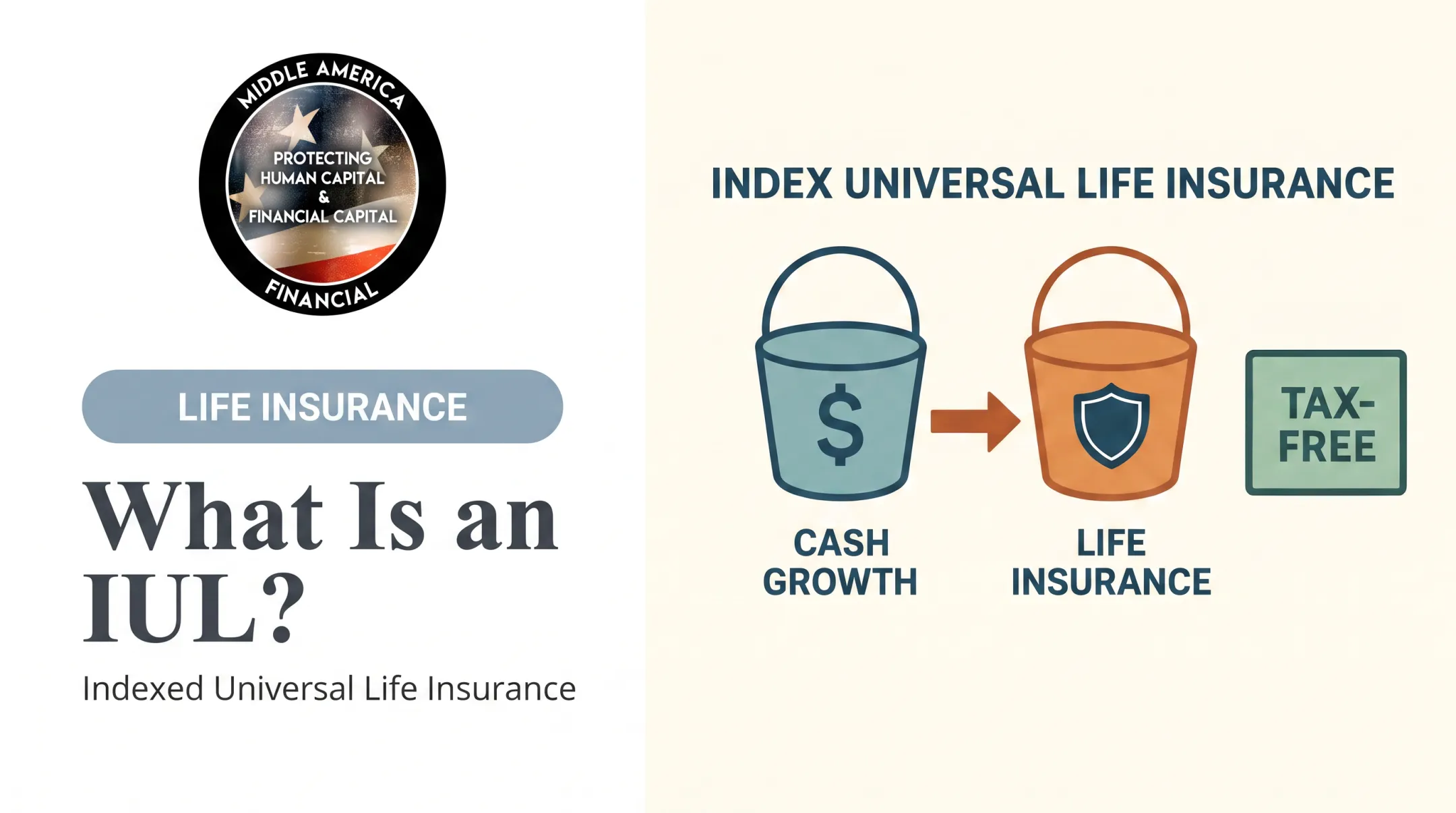
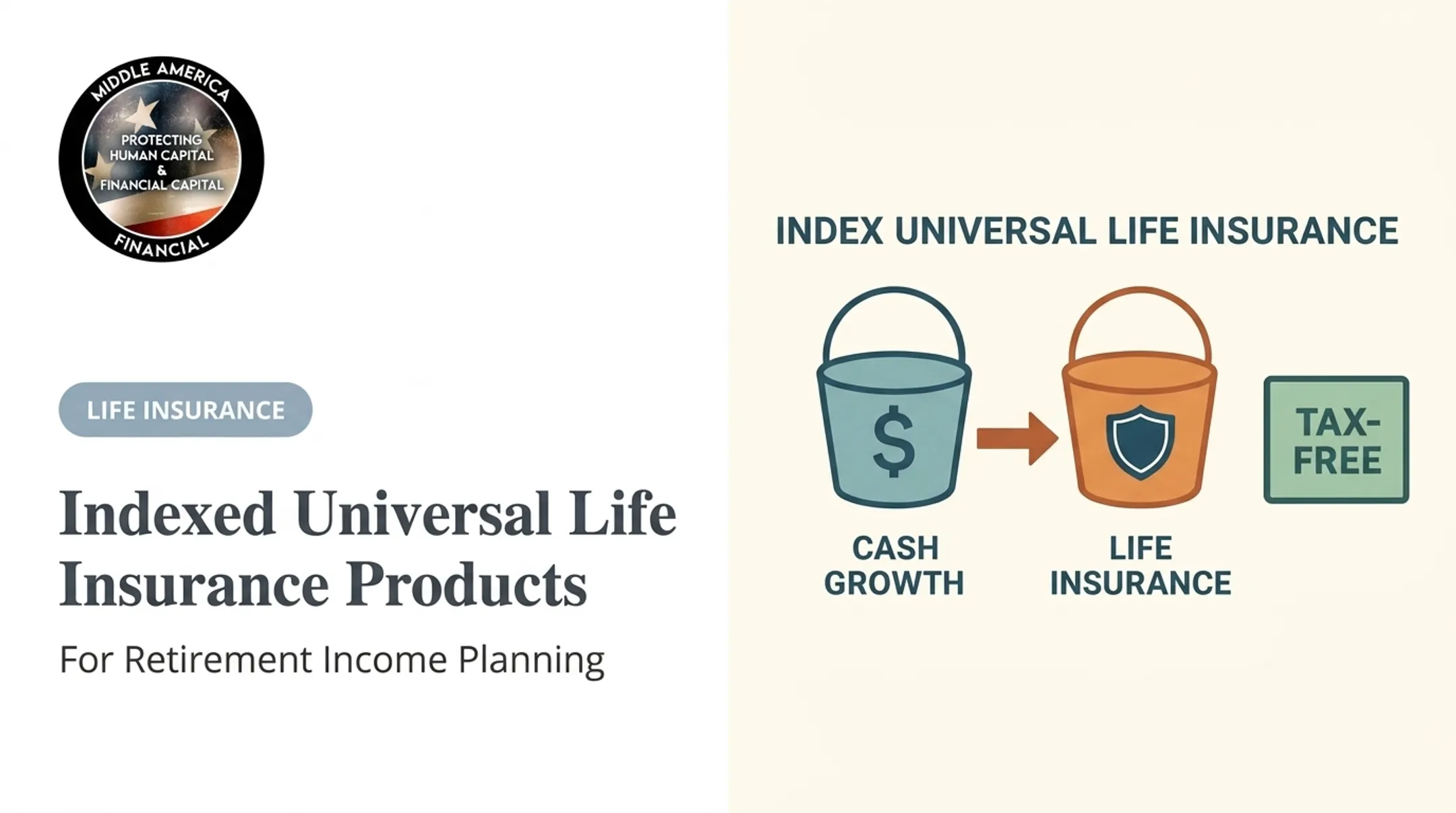
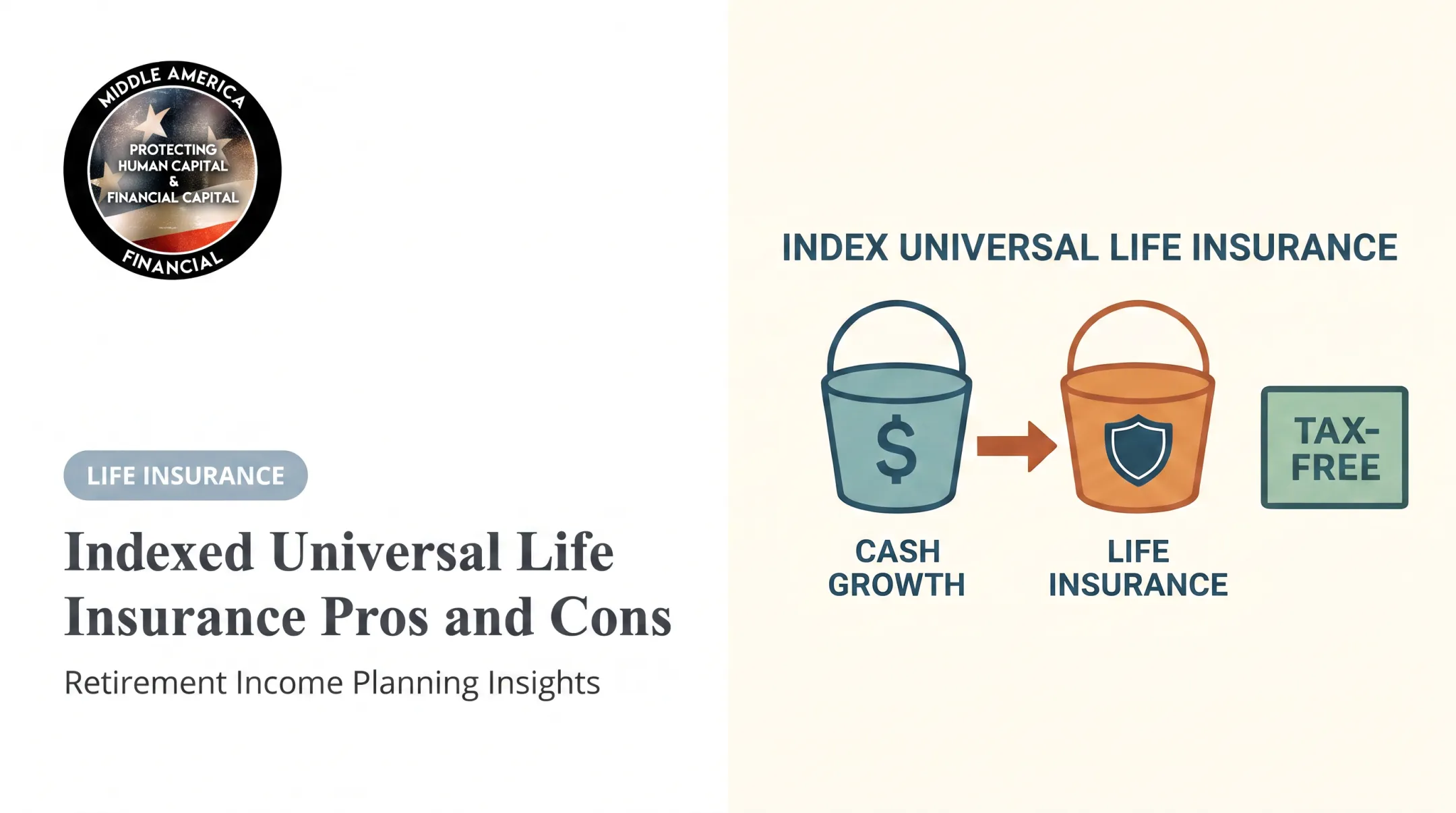
Indexed universal life (IUL) is permanent life insurance. Its cash value can grow based on a market index, such as the S&P 500. That growth is subject to a cap, a participation rate, and a guaranteed floor (usually 0%).
You don't own the index directly. The insurer credits interest based on how the index performs, within those limits.
People typically use IUL for:
- Lifelong death benefit protection
- Tax-advantaged cash accumulation
- Supplemental retirement income
- Estate and business succession planning

Think of it as a tool that complements your 401(k), Roth IRA, and emergency fund—not a replacement for them.
Key Advantages of IUL
Three advantages stand out: tax treatment, downside protection, and flexibility.
Tax-Advantaged Growth and Access
Cash value inside an IUL grows tax-deferred. Policyholders can access it tax-free through policy loans, a meaningful difference compared to taxable brokerage accounts, where gains get chipped away every year.
Morningstar's tax-drag research found U.S. equity products surrendered an average of 2% of pretax return to taxes over a recent three-year period. Over 30 years, that drag compounds into a significant gap.
In one Morningstar comparison, a tax-inefficient taxable account ended around $368,000 after tax versus roughly $456,000 for a lower-cost 401(k), based on identical starting assumptions.
IUL also skips required minimum distributions. Unlike 401(k)s and traditional IRAs, where the IRS requires withdrawals starting at age 73, an IUL policy isn't subject to that schedule because it's a life insurance contract, not a retirement account.
This advantage matters most for:
- High earners who've maxed out 401(k) and Roth IRA limits
- Anyone planning 15+ years ahead for retirement or legacy goals
- People in higher tax brackets looking to diversify tax treatment
Downside Protection via the 0% Floor
Most IUL policies guarantee a minimum credited rate, often 0%. Cash value doesn't drop just because the market has a bad year. Each year, gains lock in through an annual reset, so you're not stuck trying to "recover" from a prior loss.
The S&P 500 fell 56.8% from October 2007 to March 2009. A $100 balance that drops that far needs roughly 131.5% in gains just to break even. The 0% floor sidesteps that recovery problem entirely.

One important caveat: policy charges still apply, even in a 0% credit year. The floor protects the indexed-interest calculation, not the entire cash value from every deduction.
This advantage matters most for:
- Those within 10-15 years of retirement, sensitive to market-timing risk
- Anyone who's lived through 2008 or 2022 and doesn't want a repeat
Flexible Premiums and Estate Planning Value
IUL lets you adjust premium payments and death benefit amounts as your income and needs shift. Business owners with variable cash flow or families adjusting to a new budget can dial payments up or down within policy limits.
The death benefit also passes to beneficiaries generally income-tax-free, which supports:
- Business succession planning
- Estate liquidity for heirs
- Wealth transfer outside probate delays
The risk here: underfunding. Skip too many premiums, and you can quietly erode the policy's long-term performance, sometimes without noticing until it's a problem.
This advantage matters most for:
- Business owners and self-employed individuals
- Anyone with fluctuating income
Potential Drawbacks of IUL
These are the reasons IUL draws heavy criticism online. Most complaints trace back to poor policy design, not the product category itself.
Caps, Participation Rates, and Limited Upside
Insurers cap how much index gain gets credited to your cash value, or apply a participation rate that limits your share of the gain. And these terms can change over the life of the policy. Example: the index gains 18% in a year. Your policy has a 10% cap. You get credited 10%, not 18%. According to a 2024 WTW pricing analysis, historical caps in the 8%–12% range meant policies hit their cap roughly 45%–55% of the time and received 0% credit about 25% of the time, based on 65 years of S&P 500 history. That is the tradeoff for the downside floor: you give up the best years to avoid the worst ones.

Complexity, Fees, and Lapse Risk
IUL policies carry layered costs:
- Cost of insurance (rises with age)
- Administrative fees
- Surrender charges for early withdrawals Surrender charge periods commonly run 10-15 years. Nationwide's IUL products, for example, list 10-year schedules on some designs and 15-year schedules on others depending on issue age. Cash out early, and those charges eat into what you've built. Underfunding is the real danger. A joint SOA-LIMRA study covering 24 companies and 33.5 million policy exposures found that IUL lapse rates increased significantly across all policy years between 2015–2018 and 2019–2020. It was the only product type in the study with consistently rising lapse rates through that stretch. These policies need active monitoring, not a set-it-and-forget-it approach.
Who Should (and Shouldn't) Consider an IUL Policy
IUL works best when your basics are already covered and you can leave the policy in place for the long haul.
Strong fit when:
- High earners who've maxed out qualified retirement accounts
- Business owners looking for tax mitigation and succession planning
- People with a 10–15 year (or longer) time horizon and estate planning goals
Usually a poor fit when:
- Anyone needing short-term liquidity
- Guarantee-seekers who want zero variability
- Passive investors unwilling to monitor a policy over time
- Anyone without emergency savings or an employer 401(k) match already in place
Fit also depends on how the policy is built—caps, participation rates, and loan provisions differ by carrier. Middle America Financial's agents represent more than 40 carriers, so you can compare illustrations side by side rather than default to a single company's product. A design that looks strong from one carrier can lag a competitor's version of the same concept.

The Bottom Line
IUL can deliver tax-advantaged growth with downside protection and useful policy flexibility. Those benefits only hold up when the policy is designed well, funded adequately, and reviewed over time. Whether the pros outweigh the cons depends on your income, time horizon, and goals.
Before buying, talk to a licensed, independent insurance professional who can compare illustrations across carriers. Middle America Financial's agents can walk you through options suited to your specific situation. Reach them at 888-403-5081 or info@middleamericafinancial.com.
Frequently Asked Questions
How much does Indexed Universal Life insurance cost?
Premiums vary based on age, health, death benefit amount, and funding strategy. Cost efficiency (cash value built relative to insurance charges) matters more than the raw premium number.
What is the average rate of return on an IUL?
Conservative, properly designed policies often target modest net returns after costs. Be cautious of any illustration projecting unrealistically high returns; regulators have tightened illustration rules specifically because of this issue.
Can I cash out or sell my IUL, and how does it pay out?
You can surrender for cash value minus surrender charges, take partial withdrawals, or borrow via policy loans. The death benefit pays out to beneficiaries income-tax-free.
Is an indexed universal life (IUL) a good investment for retirement?
IUL is a life insurance contract, not a direct investment. It can supplement retirement income for people who have already maxed out other tax-advantaged accounts.
Is an IUL better than a 401(k)?
They serve different purposes: a 401(k) offers employer matching and pre-tax savings, while IUL offers tax-free access and no contribution limits. For many high earners, the two work together.
Is indexed universal life insurance legitimate?
Yes, it's a legitimate, state-regulated life insurance product. Skepticism usually stems from poor policy design or misrepresentation by some agents, not the product itself.