Introduction: What Is a Life Insurance Retirement Plan?
Many families want permanent life coverage and a way to supplement retirement income after 401(k)s and IRAs are funded. A Life Insurance Retirement Plan, or LIRP, uses a permanent life insurance policy to do both: protect your family with a death benefit and build cash value you can tap later.
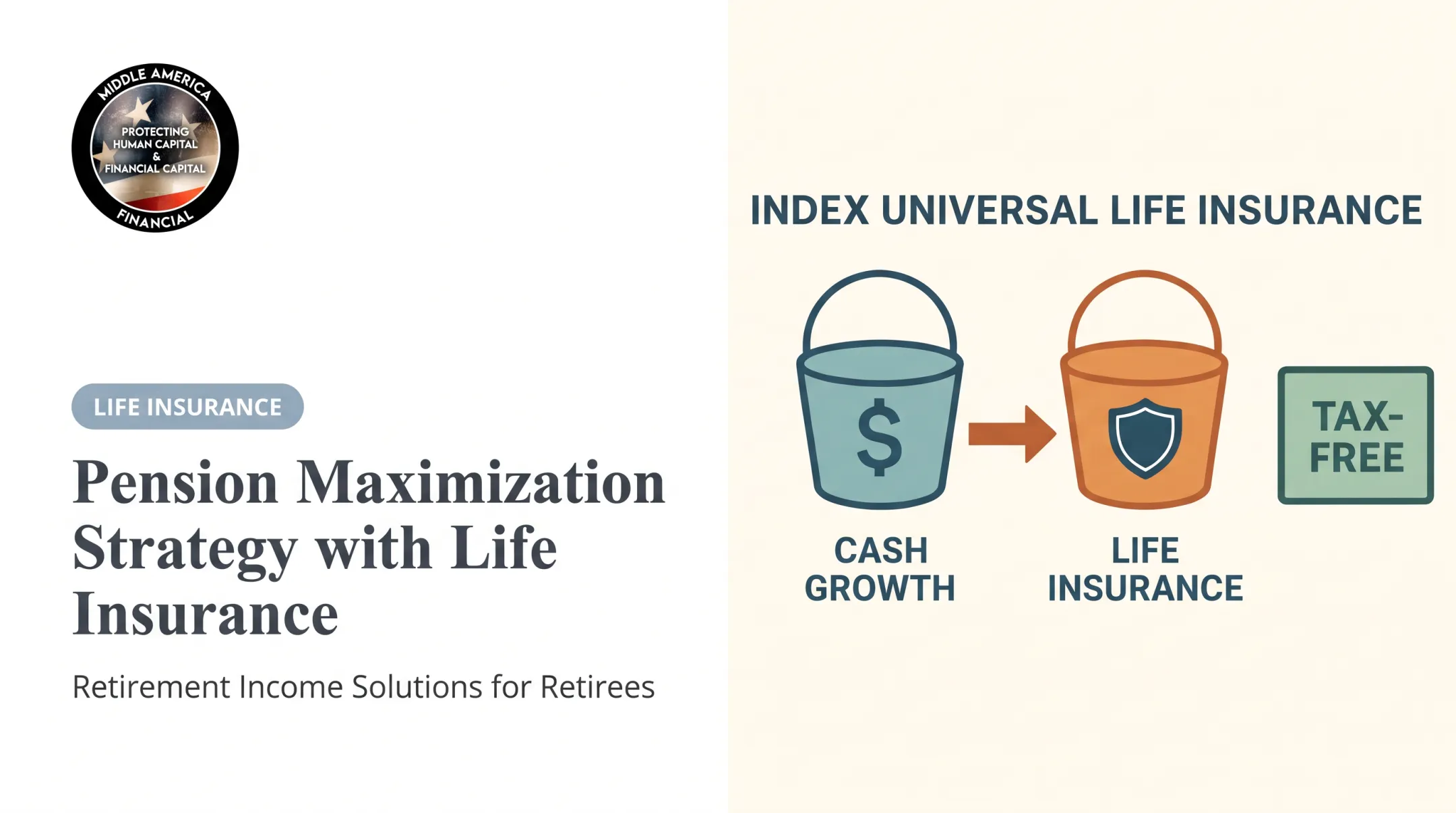
That cash value grows inside the policy and can supplement retirement income through withdrawals or loans.
A common misconception: a LIRP is not a formal, IRS-qualified retirement account. It's not a 401(k). It's not an IRA. It's a life insurance contract used as part of a broader financial strategy.
Nearly 51% of American adults have some life insurance coverage, and 40% believe they need more—close to 100 million people, according to LIMRA's 2025 Insurance Barometer Study.
This article breaks down how LIRPs work, how loans and withdrawals get taxed, the real benefits and risks, who might consider one, and what alternatives deserve a look first.
Quick Summary
- A LIRP is a permanent life insurance policy used in a retirement strategy — not a separate IRS-qualified plan
- Premiums use after-tax dollars; cash value grows tax-deferred, but access isn't automatically tax-free
- Loans, withdrawals, fees, surrender charges, and MEC status can all affect your taxes and death benefit
- Secure needed life coverage and max out suitable retirement accounts before adding a LIRP
What Is a LIRP and How Does It Work?
"LIRP" isn't a specific product — it's a strategy label. It generally refers to a permanent policy, such as whole life, universal life, indexed universal life (IUL), or variable universal life (VUL), structured so the cash value grows over time for future use.
How Premiums Build Cash Value
When you pay a premium, part of it covers the cost of insurance and administrative charges. Whatever's left over gets credited to the policy's cash value, based on the contract's terms.
Cash-value growth varies a lot by policy type:
- Whole life: guaranteed, insurer-set crediting rate
- Traditional universal life: insurer-declared interest, often with a guaranteed minimum
- IUL: index-linked crediting tied to something like the S&P 500 or Nasdaq Composite
- VUL: market-based subaccounts, meaning your cash value can go up or down with the market
Separate guaranteed values from illustrated, non-guaranteed assumptions. Insurance illustrations often show a "projected" growth rate that isn't promised anywhere in the contract. How you later tap that cash value matters just as much as how it grows.
Accessing Cash Value: Loans vs. Withdrawals
Policyholders typically access cash value two ways:
- Withdrawals reduce the cash value and death benefit directly and are generally tax-free up to your basis (what you've paid in premiums)
- Policy loans let you borrow against the cash value without technically withdrawing it, but the loan accrues interest and reduces the death benefit if unpaid at death
Why Policy Maintenance Matters
Underfunding the policy, rising internal costs as you age, or borrowing too aggressively can all push a policy toward lapse. If a policy with an outstanding loan lapses, the forgiven loan amount can become taxable income — an often-missed tax surprise.
A Modified Endowment Contract (MEC) fails the IRS "7-pay test": too much premium paid in the first seven years versus level-premium funding limits. MEC loans and withdrawals use income-first tax treatment and may add a 10% tax if taken before age 59½.
LIRP Benefits, Risks, and Tax Considerations
Potential Benefits
A well-designed and properly funded LIRP can offer:
- No IRA-style annual contribution limit (subject to Section 7702 and 7702A testing)
- No required minimum distributions the way traditional IRAs or 401(k)s have
- Continued death-benefit protection for beneficiaries, as long as the policy stays in force
- A source of income that doesn't depend on selling investments during a market downturn
Real Risks to Understand
None of this comes free. Consider the trade-offs:
- High premiums relative to term insurance for the same death benefit
- Internal charges for cost of insurance, administration, and riders that increase over time
- Limited liquidity in early policy years, often due to surrender charges
- Caps or participation limits on indexed policies that can reduce upside
- Lapse risk if premiums, loans, or charges aren't carefully managed

What's Actually Taxed — and When
Growth inside the policy is tax-deferred, not automatically tax-free. How access is taxed depends on the method and the policy's status:
- Withdrawals: Generally tax-free up to your cost basis; amounts above basis are taxable
- Policy loans: Usually not taxed while the policy stays in force and is not a MEC
- Surrender or lapse with a loan: Can trigger tax on gain, including amounts tied to the unpaid loan
IRS Publication 525 confirms that surrender proceeds above cost basis are taxable, and that unrepaid loans reduce basis when gain is calculated. In plain terms, surrendering a policy with a large outstanding loan can leave you owing tax on money you never received in cash.
LIRP Policy Types
Not all permanent policies build cash value the same way. Here's a quick side-by-side:
| Policy Type | Premium Flexibility | Growth Method | Guarantees | Market Exposure |
|---|---|---|---|---|
| Whole Life | Fixed schedule | Insurer-set rate | Strong; guaranteed cash value | None |
| Traditional Universal Life | Flexible, within limits | Insurer-declared interest | Minimum guaranteed rate, often with no-lapse guarantee | None |
| Indexed Universal Life (IUL) | Flexible | Index-linked crediting | Segment guaranteed rate; caps/participation rates can change | Indirect (no direct market participation) |
| Variable Universal Life (VUL) | Flexible | Subaccounts, similar to mutual funds | Minimal to none | Direct — you bear investment risk |
IUL vs. LIRP: Not the Same Thing
This mix-up comes up constantly. An IUL is a specific type of permanent life insurance product. A LIRP is a broader strategy: using a cash-value policy (IUL, whole life, or another permanent type) for retirement planning. IUL policies credit interest based on an index like the S&P 500 or Nasdaq Composite, without putting your premium directly into that index. How much of the index move you receive depends on three levers:
- Caps — the maximum credited rate for a segment
- Participation rates — the share of index growth applied
- Floors — the minimum credited rate, often 0% Funded and structured correctly, an IUL won't lose cash value to a down market year the way a VUL can. The trade-off is limited upside, and caps, participation rates, and other features can change over time. Whether an IUL or another permanent product fits as your LIRP depends on the actual contract terms, not assumptions about the category.

Is a LIRP Right for You? Alternatives and Evaluation Steps
When a LIRP May Warrant a Look
Consider one if most of these apply:
- You have a genuine, ongoing need for permanent life insurance coverage
- You can consistently fund the policy long-term without straining your budget
- You've already maxed out or made solid progress on workplace and individual retirement accounts
- You want tax diversification alongside traditional retirement savings
When It's Probably the Wrong Move
Skip it if:
- You just need affordable, temporary coverage (term life is usually the better fit here)
- You don't have emergency savings built up yet
- You're carrying high-interest debt
- You're not confident you can maintain premiums for the long haul
- You want a simple, low-fee, highly liquid investment
Comparing a LIRP to Other Options
The 2026 contribution limits matter here: 401(k) elective deferrals rise to $24,500, and the combined traditional/Roth IRA limit increases to $7,500, according to the IRS's 2026 retirement plan limits announcement.
| Vehicle | Contribution Limit | Tax Treatment | Liquidity |
|---|---|---|---|
| LIRP/Permanent Life | No IRS annual cap (subject to policy tests) | Tax-deferred growth; basis-first access | Limited early on; surrender charges apply |
| 401(k) | $24,500 (2026) | Pre-tax or Roth, depending on plan | Limited before retirement age without penalty |
| Traditional/Roth IRA | $7,500 combined (2026) | Pre-tax or after-tax | Roth offers more penalty-free flexibility |
| HSA | $4,400 self-only / $8,750 family (2026) | Triple tax-advantaged for medical expenses | Tax-free only for qualified medical costs |
| Taxable Brokerage | None | Capital gains and dividend taxes apply | Highly liquid |
| Fixed Index Annuity | Varies by contract | Tax-deferred growth | Surrender periods apply; income riders vary |
Term life insurance paired with investing the premium difference is also worth comparing. Term coverage runs for a set period (often 10, 20, or 30 years) and at expiration, you can renew, convert to permanent coverage, or let it end.
A Due-Diligence Checklist
Before buying, replacing, or funding a LIRP, review:
- Guaranteed vs. non-guaranteed illustrations: ask what happens under lower crediting rates
- Premium schedule and cost of insurance: how charges change as you age
- Surrender schedule: how long before charges disappear
- Loan provisions: interest rates and repayment terms
- Index caps or participation rates: and whether the carrier can adjust them
- Stress-tested scenarios: missed premiums, extended loans, changing income needs

Ask for illustrations run with conservative assumptions, not just the best-case numbers.
An independent agent can make that comparison practical. Middle America Financial works with agents who represent more than 40 insurance carriers, so you are not limited to one company's lineup.
Coordinate with a qualified tax advisor, attorney, or financial planner before any final decision. Agents can help you compare products; tax and legal questions deserve dedicated expertise.
Conclusion: Use a LIRP as Part of a Broader Plan
A LIRP can combine lasting protection with supplemental retirement funds, but its value depends on policy design, consistent funding, and regular reviews. Results vary by carrier, product structure, and how the policy is managed over time.
Before you buy, replace, surrender, or borrow against a policy, compare it with simpler alternatives and request a personalized illustration. Talk with a licensed agent and your tax or financial professional so the numbers reflect your goals, timeline, and risk tolerance. Middle America Financial works with independent agents who can walk through IUL and other cash-value options from multiple carriers and help you decide whether a LIRP belongs in your broader plan.
Frequently Asked Questions
What is a LIRP and how does it work?
A LIRP is a permanent life insurance policy structured to build cash value, which you can access later through withdrawals or loans to supplement retirement income. It combines a death benefit with a savings component inside the same contract.
Is a LIRP tax-free?
Not automatically. Growth is tax-deferred, withdrawals up to basis are generally tax-free, and loans are often untaxed while the policy stays in force. But surrendering the policy or letting it lapse with gains or an outstanding loan can create taxable income.
What are the key differences between an IUL and a LIRP?
An IUL is a specific type of permanent life insurance product that credits interest based on a market index. A LIRP describes the broader strategy of using a cash-value policy, such as an IUL or another permanent policy, for retirement planning.
Is life insurance a good retirement investment?
It can work as a supplemental strategy for people with a genuine need for permanent coverage and the funding capacity to support it long-term. It's not automatically better than a 401(k), IRA, or other traditional retirement account—compare it only after those core vehicles are funded.