Done right, life insurance creates cash exactly when an estate needs it most. It can settle debts, cover taxes, and keep a family from being forced to sell a home, farm, or business just to pay bills while the rest of the estate gets sorted out.
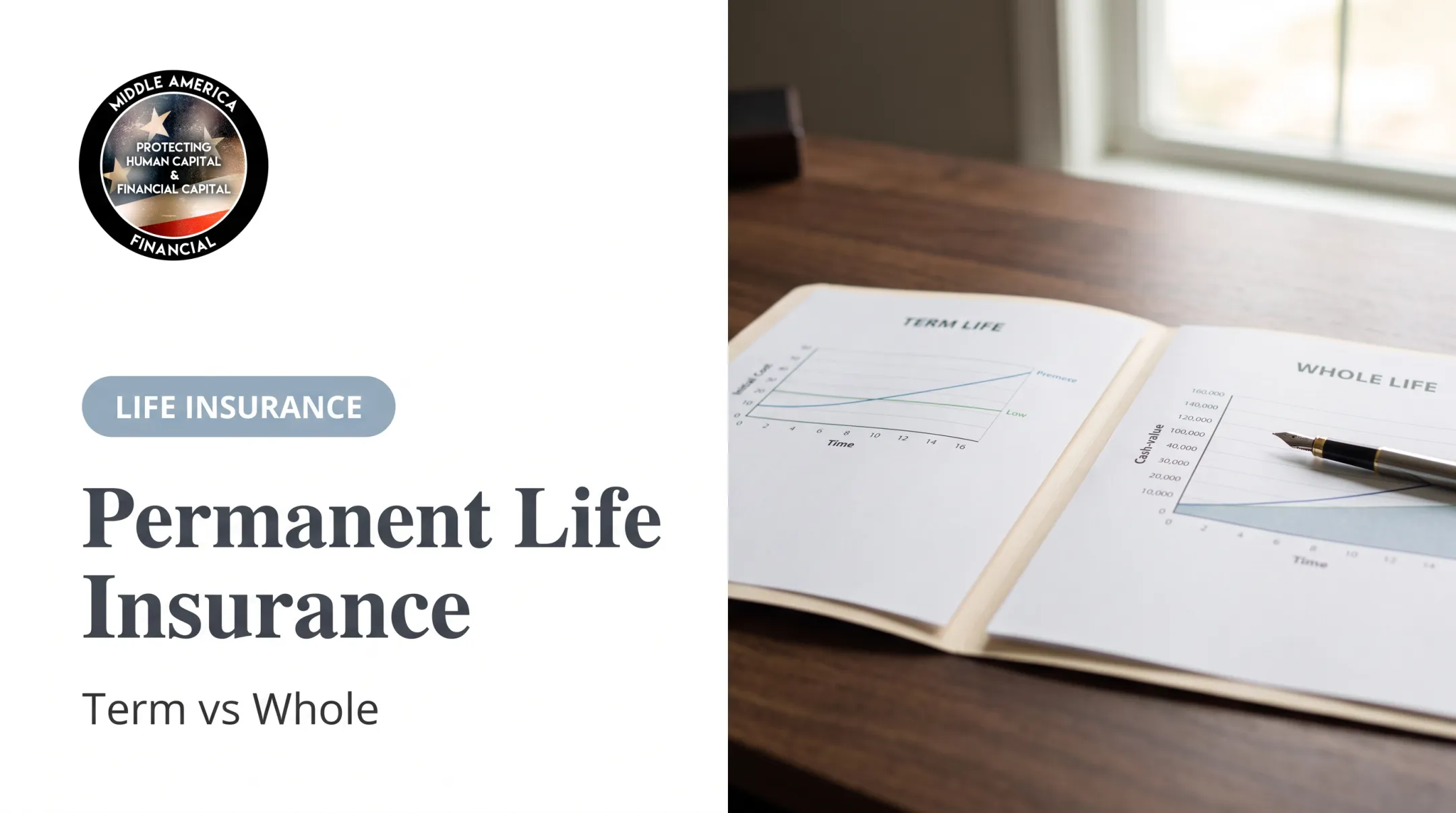
Choosing the right policy type matters just as much as choosing to buy coverage at all. Term and permanent policies differ in duration, cost, guarantees, flexibility, and cash-value potential, and each fits different estate goals.
This article compares the main types of life insurance used in estate planning, explains how ownership and beneficiary choices affect outcomes, and lays out questions worth reviewing with insurance, legal, and tax professionals.
Quick Summary
- Life insurance can fund final expenses, debts, estate taxes, and inheritances without forcing heirs to sell illiquid assets quickly
- Term policies cover temporary obligations; permanent policies provide lifelong coverage when premiums and terms are kept in force
- Permanent options—whole life, GUL, IUL, VUL, and survivorship—trade guarantees, flexibility, and risk differently
- Ownership, beneficiary, and trust structure can affect how proceeds are controlled and taxed
- Match the policy to your goal, timeline, health, budget, and broader estate plan
What Life Insurance Means for Estate Planning
What Is Life Insurance in an Estate Plan?
Life insurance is a contract that pays a death benefit to named beneficiaries after the insured person dies, subject to policy terms, exclusions, and continued premium payments.
Four roles matter here, and mixing them up causes real problems:
- Policy owner – controls the contract, including who's named as beneficiary
- Insured – the person whose life is covered
- Beneficiary – receives the death benefit
- Trustee – manages proceeds when a trust owns or receives the policy
One person can hold multiple roles, or they can be split among different people and entities entirely. That's where things get strategic.

Life insurance doesn't replace a will, trust, or power of attorney. It's one tool among several, and it only works well when it's coordinated with the rest of your documents.
Why Can Life Insurance Be Important for an Estate?
A death benefit creates cash fast—often faster than an estate can access through other channels. That cash can cover:
- Funeral and final expenses
- Outstanding debts and mortgage balances
- Estate taxes and professional fees
- Family living expenses during probate
It also protects illiquid assets. A family business, a farm, or a rental property doesn't have to be sold under pressure if there's cash on hand to cover obligations instead.
Insurance also supports inheritance equalization. Say one adult child wants to inherit the family business, but a sibling has no interest in running it. Life insurance proceeds can go to the sibling instead, balancing things out without forcing a sale or a buyout dispute.
For business owners, this extends to succession planning through buy-sell agreements, where proceeds fund a surviving owner's purchase of a deceased partner's interest.
How you structure ownership also drives tax treatment. Under current IRS instructions for Form 706, proceeds payable to or for the estate are includable in the gross estate. Proceeds paid elsewhere may still be included if the decedent held "incidents of ownership" at death—such as the power to change a beneficiary or borrow against the policy.
A three-year lookback rule can also apply to certain transfers. An estate-planning attorney and tax adviser should review ownership structure before you lock it in.
Types of Life Insurance for Estate Planning
Every policy type falls into one of two buckets: term or permanent. But the label alone doesn't tell you if it's the right fit. The estate-planning need should drive the decision, not the policy category.
Term Life Insurance
Term life covers you for a specific period, commonly 10, 20, or 30 years. The death benefit pays out only if you die during that term while premiums stay current. This fits temporary estate needs well:
- Replacing income while children are still dependents
- Covering an outstanding mortgage balance
- Backing a business loan
- Bridging the gap before other assets accumulate Middle America Financial's network includes term products for these needs, including mortgage protection insurance sized so the death benefit can pay off the remaining loan and help a family stay in their home. Strengths: Term is simpler and typically cheaper upfront than permanent coverage, especially for younger, healthier applicants. Limitations: There's no cash-value component. Coverage can expire before you die, and renewal costs after the term often run higher. If a lifelong need shows up later, check your policy's conversion provisions before assuming you're stuck.
Whole Life Insurance
Whole life is permanent coverage designed to stay in force for your entire life, as long as required premiums are paid. It comes with a stated death benefit and a cash-value component that grows over time. According to the NAIC's overview of life insurance products, whole life builds cash value from premiums after fees and insurance costs, and policyholders can typically borrow against that value. Some policies pay dividends based on the insurer's financial performance, but dividends are not guaranteed on non-participating contracts. Whole life fits well for:
- Legacy planning and final-expense coverage
- Predictable, permanent liquidity needs
- Simplified-issue final expense coverage for older applicants One example from the carrier side: Mutual of Omaha's Living Promise policy offers simplified underwriting with level and graded death-benefit options, issue ages from 45 to 85, and face amounts between $2,000 and $40,000, for final-expense planning. Trade-offs: Premiums run higher than term. There's less flexibility than universal life designs. Surrender charges apply if you cancel early, and unpaid policy loans reduce the death benefit paid to beneficiaries.
Universal Life Insurance
Universal life is permanent insurance that allows some adjustment to premiums and death benefits within policy limits. Flexibility still has limits: skipping payments can cause a lapse if cash value can't cover ongoing charges. This flexibility appeals to business owners and families whose income or legacy goals shift over time. Within universal life, there are a few distinct designs worth knowing: Guaranteed Universal Life (GUL) focuses on a guaranteed death benefit for a specified period, rather than cash-value growth. As long as scheduled premiums are paid, the death benefit and coverage duration are locked in. Middle America Financial's network includes guaranteed universal life products structured to guarantee coverage from at least age 80 up to age 120, provided funding requirements are met. Indexed Universal Life (IUL) credits cash value based on a formula tied to an external index, like the S&P 500. According to Guardian's explanation of IUL mechanics, these policies use caps (a ceiling on credited interest), participation rates (the percentage of index gains credited), and a floor—often 0%—so a down-market year doesn't directly cut cash value from index performance. Loans, withdrawals, and ongoing charges can still reduce policy values regardless of index results. Illustrations of projected growth are not promises of future performance. Variable Universal Life (VUL) allocates cash value into investment subaccounts that rise and fall with market performance. Because it's registered as a security, VUL carries more investment risk than IUL and requires a FINRA-registered representative to sell it. It also demands more active monitoring from the policyholder. Choose based on priority, not labels. GUL favors a locked-in death benefit; IUL adds indexed growth potential with a floor; VUL offers higher upside with full market risk and more hands-on oversight.

Survivorship Life Insurance
Survivorship, or second-to-die, insurance covers two people under one policy and pays out only after the second insured dies. This structure is often considered by married couples focused on:
- Estate-tax liquidity that becomes needed after both spouses have passed
- Funding a trust designed to benefit the next generation
- Leaving a legacy payment that doesn't need to arrive until later The key limitation: there's no payout after the first spouse dies. If immediate income replacement or first-death liquidity is the goal, survivorship coverage doesn't address that on its own. Because both people are underwritten together, survivorship policies can sometimes cost less than two individual permanent policies, even when one spouse has health issues that might otherwise raise premiums. These policies are often owned by an irrevocable trust so proceeds stay outside the taxable estate. That structure needs coordination with marital and estate-tax planning—not a do-it-yourself approach.
How to Choose the Right Type of Life Insurance
The right policy fits your objective, timeline, cash flow, and legal structure—not the one packed with the most optional features.
Clarify the Estate-Planning Goal
Match the coverage type to the timeline of the need:
- Temporary goals (mortgage protection, income replacement, dependent children) → term coverage sized to the obligation
- Permanent goals (legacy creation, business succession, estate-tax liquidity) → a policy designed to remain in force for life when premiums and funding stay on track
Determine Coverage and Duration
Before estimating a coverage amount, inventory:
- Outstanding debts and final expenses
- Income needs for dependents
- Business interests and buy-sell obligations
- Existing assets and expected taxes
Then stress-test the plan for inflation and for cash needs that hit before other assets can be sold. Build in margin so the coverage still works under those conditions.
Evaluate Affordability and Policy Mechanics
Compare these items across the policies you're considering:
- Premiums and how they can change over time
- Guaranteed versus non-guaranteed values
- Surrender charges
- Conversion rights (especially on term)
For permanent policies, request both current and guaranteed in-force illustrations. Review the worst-case crediting scenario, not only the projected one.
Coordinate Ownership, Beneficiaries, and Trusts
Who owns the policy and who's named as beneficiary directly affects control, probate exposure, and tax treatment. An irrevocable life insurance trust (ILIT) is sometimes used for estate-tax planning, but gift-tax rules and trustee duties require an attorney—not a generic template.
Beneficiary designations also need to stay current. Review them after marriage, divorce, a new child, or a business change; a designation that's out of sync with your will can undo other planning entirely.
Work with an Independent Professional Team
Coordinate the decision across an insurance professional, an estate-planning attorney, and a tax adviser. Each covers a different piece of the plan.
Middle America Financial is an independent brokerage representing more than 40 insurance carriers and hundreds of products across the U.S. That range lets agents compare policy structures and carriers side by side for a specific estate-planning goal.

This guidance complements legal and tax advice; it does not replace it. Product availability still varies by state.
What to Check Before Finalizing a Policy
A few common missteps show up again and again in estate-planning conversations. Before signing anything, check the following:
- Match the product to the need — confirm whether coverage should be temporary, permanent, or both before choosing term or permanent insurance on price or perceived sophistication alone.
- Stress-test the illustration — ask for guaranteed figures and downside performance instead of relying on projected index credits, dividends, or investment assumptions.
- Review the long-term funding commitment, including renewal costs, surrender charges, and the risk the policy could lapse if underfunded.
- Vet beneficiary designations carefully before naming the estate, a minor, or someone on means-tested benefits, and understand the probate or public-benefit consequences first.
- Tie the policy into the broader estate plan by confirming ownership, beneficiaries, and trustee details, then revisit after marriage, divorce, births, deaths, or major asset changes.
Conclusion
Life insurance can provide liquidity, protect family and business assets, and support a more balanced inheritance when it's part of a coordinated estate plan.
Term, whole, universal, and survivorship policies each serve different objectives, with different costs, guarantees, and risks attached. The right type depends on your specific goal, timeline, and budget.
A practical next step: gather your current policy documents, estate-planning paperwork, debts, assets, and beneficiary information. Review them with a licensed insurance professional, your estate-planning attorney, and a tax adviser. Middle America Financial's independent agents can help you compare carrier and policy options as part of that review.
Frequently Asked Questions
Is life insurance paid to an estate or beneficiary?
Proceeds generally go to the named beneficiary directly. Naming the estate instead routes them through probate, which can delay payment and change tax treatment.
Is life insurance part of an estate?
It depends on ownership and beneficiary structure. Proceeds paid to a named individual beneficiary typically bypass probate, but they may still count toward the taxable estate depending on who owned the policy.
What type of life insurance is best for estate planning?
Permanent coverage often fits lifelong legacy or liquidity goals, while term coverage fits temporary obligations like a mortgage or dependent-care years. The right choice depends on your goals, budget, health, and how long you need coverage.
Do I need a trust for life insurance in an estate plan?
Not always. An irrevocable life insurance trust or special-needs trust can add distribution control and may help keep proceeds outside the taxable estate. Talk to an estate-planning attorney before setting one up.
What is the difference between term and permanent life insurance for estate planning?
Term provides fixed-period protection with no cash value and can expire before death. Permanent policies aim for lifelong coverage, build cash value, and typically cost more, with guarantees that vary by product.
How can business owners use life insurance in estate planning?
Business owners use life insurance to fund buy-sell agreements, cover key-person risk, provide transition liquidity, and equalize inheritances among heirs. Coordinate policy design with your business agreement and legal and tax advisors.